

Why Do Some Eyeglasses Look Amazing Online but Different on Your Face?
Discover why eyeglasses look different online and on your face. Learn how face shape, frame size, lighting, and fit affect your eyewear choices.

Md Tauqueer Raza
Author & Contributor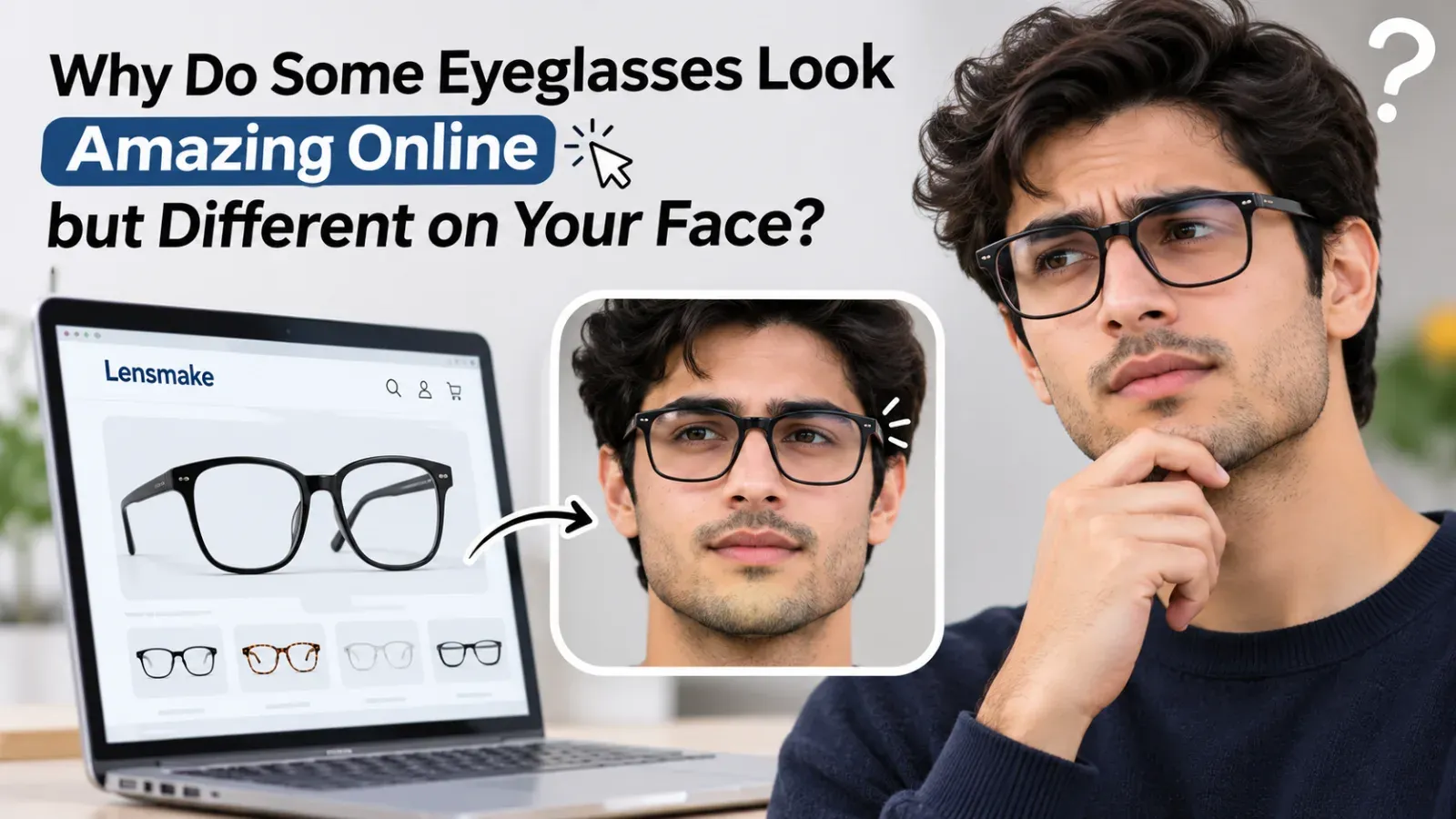
Have you ever found a pair of eyeglasses online that looked absolutely perfect, only to discover that they looked completely different when you tried them on? You're not alone.
A frame that appears stylish on a model or in a product photograph may look wider, smaller, rounder, or less flattering on your own face. This happens because eyewear appearance depends on much more than the frame's design.
Your facial proportions, skin tone, frame measurements, camera angles, and even lighting can influence how glasses look.
Before choosing your next pair of eyeglasses online, understanding these factors can help you make a more confident decision.
Let's explore why glasses sometimes look different in real life and how to find frames that suit you.
1. Your Face Shape Changes How Frames Look
One of the biggest reasons eyeglasses look different on different people is facial structure.
Every face has a unique combination of proportions, including forehead width, cheekbone placement, jawline shape, and facial length.
For example, round frames may create a softer appearance on an angular face, while rectangular frames can introduce more defined lines to a rounder face.
However, these are styling suggestions rather than strict rules.
Two people with similar face shapes can still look completely different wearing the same glasses because their individual features and proportions vary.
Helpful tip: Instead of choosing frames based only on face-shape categories, pay attention to how the frame width, lens height, and bridge fit your face.
2. Frame Size Matters More Than You Think
A pair of glasses can look perfectly proportioned in an online photograph but appear oversized or too narrow when worn.
This is often caused by differences in frame measurements.
Most eyeglass frames include three important dimensions:
Lens width: The horizontal width of one lens.
Bridge width: The distance between the lenses.
Temple length: The length of the arms extending toward your ears.
These measurements are usually expressed in millimeters.
For example, a frame marked 52-18-140 generally has a 52 mm lens width, an 18 mm bridge width, and 140 mm temples.
However, these numbers alone do not determine the complete fit. Overall frame width, lens shape, and bridge design also matter.
Helpful tip: Compare the measurements of new frames with a pair you already wear comfortably.
3. Product Photography Can Change Your Perception
Professional eyewear photography is designed to showcase a frame's shape, color, and details.
Photographers use controlled lighting, camera angles, and carefully selected backgrounds to make products visually appealing.
However, a frame photographed straight from the front may appear different when viewed from the side.
Camera perspective can also influence how wide or narrow a frame looks.
Close-up photography may exaggerate certain proportions, while longer-distance photography can create a different visual impression.
This doesn't necessarily mean the product photograph is inaccurate. It means a two-dimensional image cannot communicate every detail of a three-dimensional object.
Helpful tip: Look for multiple product views, including front, angled, and side photographs.
4. The Model's Facial Features Influence the Overall Look
Online eyewear stores frequently use models to demonstrate how frames appear when worn.
These images are useful, but the model's facial proportions may differ from yours.
A frame that looks narrow on someone with a wider face may appear oversized on someone with a smaller face.
Similarly, the position of the eyebrows, cheekbones, nose bridge, and ears can affect how glasses sit.
Even hairstyle can change the overall impression of a frame.
For this reason, model photographs should be treated as visual references rather than guarantees of how the glasses will look on you.
5. Skin Tone and Lighting Affect Frame Colors
Have you ever ordered glasses that appeared dark brown online but looked almost black in person?
Lighting conditions can change how colors are perceived.
Studio lights, daylight, indoor lighting, and screen settings may all influence the appearance of eyewear materials.
Transparent frames are particularly sensitive to lighting because their appearance can change depending on the background and the wearer's skin tone.
Tortoiseshell patterns, metallic finishes, and translucent colors can also look different under various conditions.
Helpful tip: Check product photographs against neutral backgrounds and look for close-up images showing the actual frame material.
6. Your Nose Bridge Affects How Glasses Sit
A frame may look attractive in a photograph but sit too high, too low, or too far away from your face.
One possible reason is the bridge design.
Different frames use different nose-support structures, including molded plastic bridges and adjustable nose pads.
The way these components interact with your nose affects both comfort and appearance.
If the bridge does not fit properly, glasses may slide down, sit unevenly, or rest too close to your cheeks.
This can change the position of the lenses relative to your eyes and influence how the frame looks.
Helpful tip: Consider bridge style and adjustability alongside the frame's overall design.
7. Virtual Try-On Tools Have Limitations
Virtual try-on technology has made online eyewear shopping more interactive.
These tools typically use a photograph or camera feed to position a digital representation of glasses on your face.
They can help you compare different shapes, colors, and styles.
However, virtual try-on tools may not perfectly reproduce physical fit.
Results can vary depending on camera calibration, face tracking, image quality, and whether the tool accurately represents frame dimensions.
A virtual preview may show how a frame could look, but it cannot always tell you how comfortable the glasses will feel after several hours.
Helpful tip: Use virtual try-on as a styling aid, not as a replacement for checking measurements and fit.
8. Lens Shape Can Change Your Facial Appearance
Eyeglass lenses are available in many shapes, including round, oval, rectangular, geometric, and cat-eye designs.
Each shape creates a different visual effect.
Large lenses may cover more of the upper cheeks, while narrow rectangular lenses can produce a more understated appearance.
The thickness and design of prescription lenses can also affect the final look.
For stronger prescriptions, lens thickness and optical effects may be more noticeable, depending on the prescription and frame choice.
This is another reason why the same frame can look different with demonstration lenses and finished prescription lenses.
9. How to Choose Eyeglasses That Look Better in Real Life
Choosing eyewear online becomes easier when you focus on a few practical details.
Start with your current glasses. If you already own a comfortable pair, check its measurements and compare them with new options.
Explore different frame shapes. Don't limit yourself to one style simply because a face-shape guide recommends it.
Check multiple product images. Front, side, and angled photographs provide a more complete understanding of the design.
Consider your daily activities. Lightweight frames, durable materials, and comfortable bridges may matter more than appearance alone.
Think about color versatility. Neutral shades can be easier to coordinate with everyday clothing, while bold colors can create a distinctive look.
Review fitting and return policies. These can be particularly important when purchasing glasses online.
You can explore different eyeglass frames and styles at Lensmake while comparing the designs and measurements that best match your preferences.
10. Confidence Is Part of Choosing the Right Glasses
Eyeglasses are both vision-correction tools and personal accessories.
The way you feel wearing a particular frame can influence how comfortable and confident you appear.
A style that looks fashionable on someone else may not reflect your personal taste.
Likewise, an unusual frame that initially seems too bold might become your favorite accessory.
The goal is not to copy the exact appearance of an online model.
Instead, focus on finding eyewear that complements your features, fits comfortably, and suits your lifestyle.
Frequently Asked Questions
1. Why do glasses look bigger on my face than online?
The model's face size, camera perspective, and actual frame dimensions can make glasses appear larger or smaller than expected.
2. How can I tell whether eyeglasses will fit before buying online?
Compare lens width, bridge width, temple length, and overall frame dimensions with glasses you already wear comfortably. Check the retailer's sizing information.
3. Are virtual try-on tools accurate?
They can be useful for comparing styles, but they may not perfectly represent frame scale, nose-bridge fit, or physical comfort.
4. Do transparent glasses look different on different skin tones?
Yes. Transparent and translucent frames can appear different depending on skin tone, background colors, and lighting.
5. Can prescription lenses change how glasses look?
Yes. Lens thickness, prescription strength, and optical magnification or minification can affect the finished appearance of eyewear.
6. What should I do if my new glasses don't look or fit right?
Check the retailer's adjustment, exchange, and return options. An optician may be able to adjust certain frames, but not every fit problem can be corrected.
Final Thoughts
Eyeglasses can look amazing online yet appear different on your face because eyewear styling depends on many interacting factors.
Frame measurements, facial proportions, bridge design, lens shape, lighting, and photography all influence the final appearance.
Understanding these details can help you shop more confidently and avoid choosing frames based only on attractive product photographs.
The best glasses are not necessarily the ones that look perfect on a model. They're the ones that provide appropriate vision correction, fit comfortably, and reflect your personal style.
For more eyewear inspiration and frame options, visit Lensmake.
About the Author
Md Tauqueer Raza is a Shopify Developer at Lensmake with an interest in eyewear fashion, lens technology, e-commerce, and digital shopping experiences. He enjoys creating helpful articles about eyeglasses, contact lenses, eye care, and online eyewear shopping.
Website: Lensmake – Eyewear & Eye Care