
High-Risk Pregnancy in 2026: 7 Emerging Trends Every OB-GYN Should Know
Discover 7 emerging trends transforming high-risk pregnancy care in 2026, from AI-powered ultrasound to pre-eclampsia prediction and personalized maternal monitoring.

Khyatee Thakur
Author & Contributor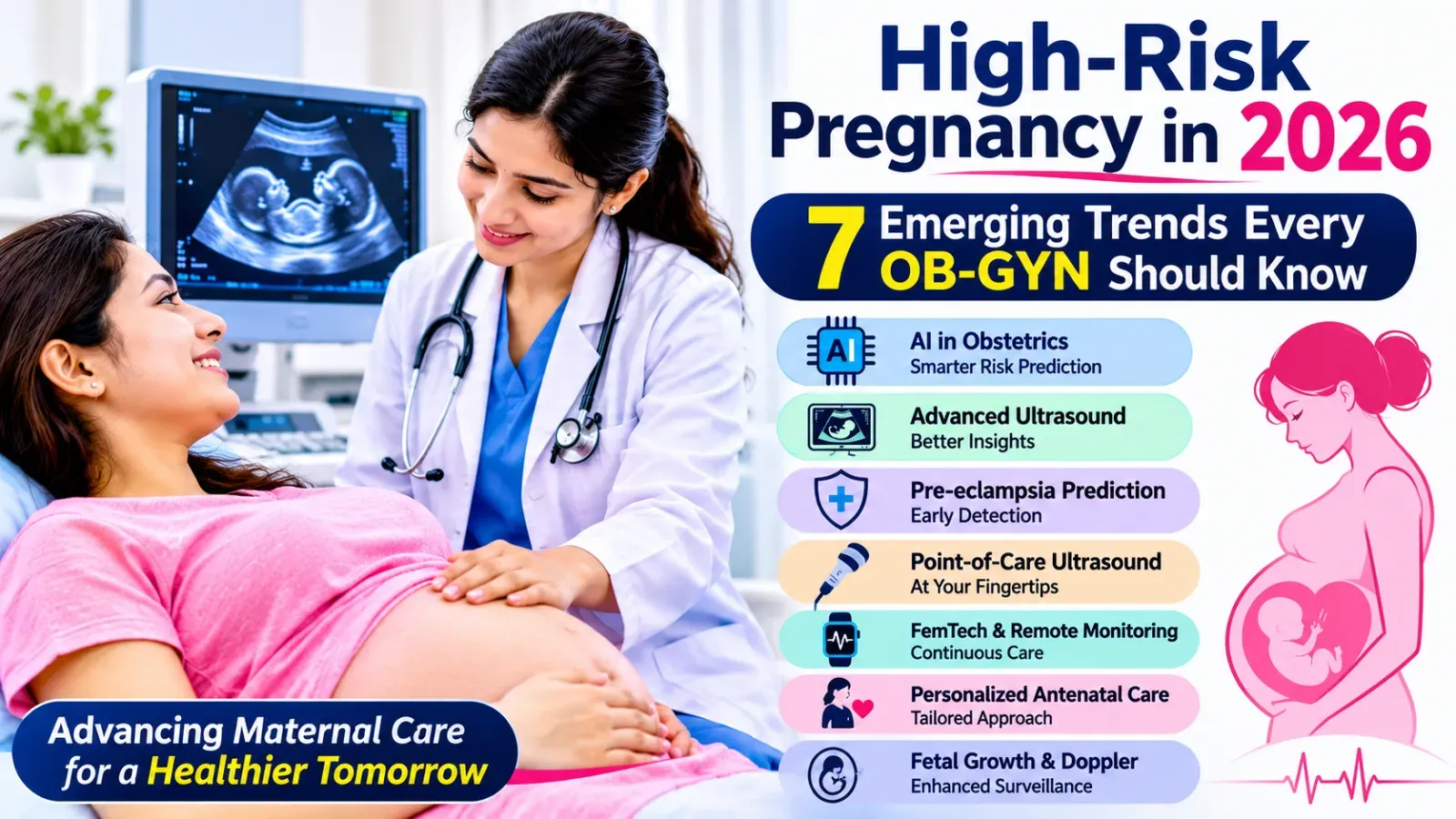
High-Risk Pregnancy in 2026: 7 Emerging Trends Every OB-GYN Should Know
Is routine obstetric knowledge enough to manage the complexities of modern pregnancy care?
High-risk obstetrics is evolving rapidly. AI-assisted diagnosis, advanced fetal imaging, early risk prediction and personalized maternal monitoring are changing how doctors approach complicated pregnancies.
For OB-GYNs, staying updated is no longer optional. It is an important part of professional growth and responsible clinical practice.
Here are seven emerging developments every doctor should understand in 2026.
1. AI in Obstetrics: The New Era of Pregnancy Risk Prediction
Artificial intelligence is becoming one of the most discussed developments in maternal healthcare.
Recent research explores AI applications in:
Predicting pre-eclampsia and pregnancy complications
Automated fetal biometry
Ultrasound image analysis
Fetal monitoring and CTG interpretation
Identifying patients who may require closer surveillance
The important development is not simply automation. It is the possibility of supporting earlier clinical assessment and more informed decision-making.
However, AI tools still require clinical validation, careful interpretation and professional oversight.
2. AI-Assisted Ultrasound and Fetal Imaging
Ultrasound remains central to modern obstetric care, but technology is changing how images are acquired and interpreted.
Emerging applications include automated fetal measurements, standard-plane detection, image-quality assistance and AI-supported interpretation.
These developments may help improve access to imaging expertise, particularly in settings with limited specialist availability.
For OB-GYNs, understanding fetal biometry, ultrasound findings and the limitations of automated tools is increasingly important.
3. Pre-eclampsia Prediction: A Major Focus in Maternal Healthcare
Pre-eclampsia continues to be a major concern worldwide.
In October 2026, WHO launched its Global Roadmap for Hypertensive Disorders of Pregnancy 2026–2035, highlighting the importance of improved prediction, prevention, diagnosis and treatment.
Doctors should remain updated on:
Maternal risk-factor assessment
Blood pressure monitoring
Appropriate screening strategies
Placental biomarkers where indicated
Evidence-based prevention
Early recognition of severe disease
Emerging AI-based approaches to predicting hypertensive disorders are also attracting research interest.
4. Point-of-Care Ultrasound (POCUS): Bringing Imaging Closer to Clinical Practice
One important 2026 development is the growing interest in point-of-care ultrasound.
Handheld ultrasound devices, wireless probes and remote expert support are expanding the possibilities for focused bedside assessment.
Potential applications include:
Early pregnancy assessment
Confirmation of fetal presentation
Selected placental assessments
Amniotic fluid evaluation
Emergency obstetric triage
POCUS is a focused clinical tool, not a replacement for comprehensive fetal anatomy scans, specialist ultrasound or appropriate Doppler surveillance.
Training, competency assessment and clear referral protocols remain essential.
5. FemTech and Remote Maternal Health Monitoring
Digital maternal healthcare is moving beyond traditional hospital visits.
Emerging FemTech applications include:
Remote blood pressure monitoring
Digital glucose tracking
Pregnancy health applications
Wearable monitoring devices
Teleconsultation and remote counselling
Digital patient education
These technologies may support continuity of care, particularly for patients requiring closer monitoring.
However, digital monitoring must be integrated with appropriate clinical review and escalation pathways.
6. Personalized Antenatal Care: Moving Beyond One-Size-Fits-All Monitoring
A major direction in modern obstetrics is risk-stratified antenatal care.
Instead of treating every pregnancy as having identical monitoring needs, doctors increasingly focus on individual maternal, fetal and placental risk factors.
Important areas include:
Early pregnancy risk assessment
Identification of maternal medical conditions
Screening for pregnancy complications
Individualized fetal surveillance
Appropriate follow-up and referral
The goal is to identify risks early and provide the right level of care at the right time.
7. Fetal Growth Restriction and Advanced Doppler Surveillance
Fetal growth restriction remains an important clinical challenge.
Modern assessment involves understanding fetal growth patterns, estimated fetal weight, amniotic fluid and Doppler findings.
Umbilical artery Doppler is particularly important in the management of pregnancies complicated by fetal growth restriction.
Doctors need to understand how these findings influence surveillance and delivery planning.
Accurate interpretation is essential because not every small fetus has pathological growth restriction.
Why Should OB-GYNs Focus on Advanced Clinical Learning?
New research, changing guidelines and emerging diagnostic technologies make continuous medical education important.
Doctors managing complicated pregnancies need a strong understanding of:
Maternal medical complications
Fetal growth and development
Advanced obstetric ultrasound
Hypertensive disorders
Diabetes in pregnancy
Preterm birth management
Obstetric emergencies
Evidence-based clinical decision-making
Structured professional learning, specialist mentorship and case-based education can help doctors strengthen their understanding of these areas.
Exploring Medical Education Opportunities
For doctors interested in expanding their professional knowledge, Medical Global Academy offers online medical education and professional upskilling programs.
Its website features fellowship programs, PG Diplomas and certificate courses across different medical specialties, including obstetrics and gynecology.
Doctors can explore the available programs and review the curriculum, eligibility requirements and relevant certification details.
Explore Medical Global Academy: https://medicalglobalacademy.com/
Frequently Asked Questions
1. What are the latest trends in high-risk pregnancy management in 2026?
Major areas of development include AI-assisted pregnancy risk assessment, advanced ultrasound, POCUS, remote maternal monitoring, personalized antenatal care and improved pre-eclampsia screening.
2. How is AI being used in obstetrics?
AI is being researched for fetal ultrasound analysis, automated measurements, pregnancy risk prediction and fetal monitoring. Clinical validation and professional oversight remain essential.
3. Why is early pre-eclampsia detection important?
Early identification of risk can support appropriate preventive strategies, closer monitoring and timely clinical intervention.
4. What is POCUS in obstetrics?
Point-of-care ultrasound is a focused ultrasound examination performed to answer specific clinical questions. It complements rather than replaces comprehensive specialist imaging.
5. Why should OB-GYNs update their clinical knowledge?
Continuous learning helps doctors remain familiar with evolving research, diagnostic technologies and evidence-based approaches to complicated pregnancies.
Conclusion: The Future of Obstetrics Is Changing. Are You Ready?
High-risk pregnancy care is becoming more technology-supported, personalized and evidence-driven.
AI, advanced imaging, remote monitoring and early risk assessment are creating new opportunities in maternal healthcare.
But technology alone cannot replace clinical expertise.
The ability to recognize complications, interpret findings and make appropriate decisions will continue to define good obstetric practice.
For every OB-GYN, the next step is to keep learning, keep adapting and stay prepared for the challenges of tomorrow's maternal healthcare.
Medical Disclaimer: This article is for educational purposes only. Clinical decisions should follow current guidelines, individual patient assessment and applicable professional standards.