
Best Free Blogging Platforms to Publish Your Writing
Discover the best free blogging platforms to publish your writing. Compare WordPress, Blogger, Medium, Substack and more to find the right fit.
Priyanshi
Author & Contributor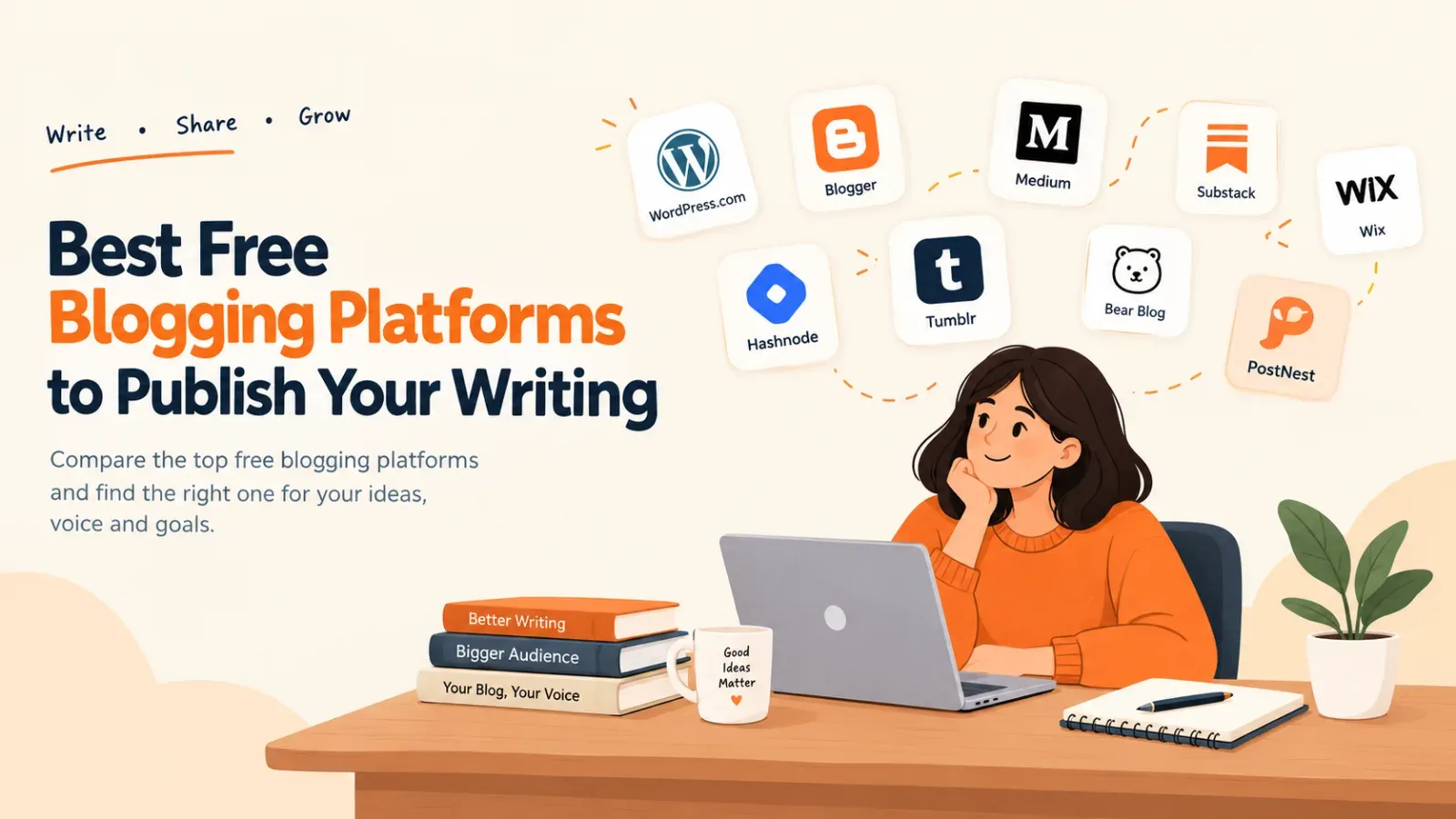
Introduction
Starting a blog is a great way to share your knowledge, express your thoughts, build an online presence, or connect with people who have similar interests. The good news is that you do not need to spend money to publish your first article. Several free blogging platforms allow you to create a blog and share your writing online without paying for hosting.
However, choosing the right platform can be confusing. Some websites are designed for personal blogging, while others are better for professional writing, newsletters, or building an audience. A platform that works well for one writer may not be the right choice for someone else.
So, what are the best free blogging platforms to publish your writing?
In this guide, we will look at some of the best options, their useful features, advantages, and limitations. Whether you are a beginner, student, professional writer, or someone who simply enjoys sharing ideas, this list will help you find a platform that matches your needs.
What Should You Look for in a Free Blogging Platform?
Before choosing a blogging platform, think about what you want to achieve. You might want to publish personal stories, share educational content, build a professional writing portfolio, or grow an audience.
Here are a few important things to consider:
Ease of use: Choose a platform where you can write, edit, and publish articles without technical knowledge.
Free publishing: Check whether you can publish articles without paying for a subscription.
Design options: A clean and readable design makes your articles more enjoyable.
Search visibility: Look for basic options that help search engines understand your content.
Audience growth: Some platforms help new writers connect with existing readers.
Future growth: Consider whether you can upgrade, use a custom domain, or move your content later.
Remember that free does not always mean unlimited. Some platforms offer free publishing but charge for extra features, custom domains, or advanced tools.
8 Best Free Blogging Platforms to Publish Your Writing
1. WordPress.com – Best for Beginners Who Want to Grow
WordPress.com is one of the most popular choices for people who want to start blogging without dealing with complicated website setup.
It provides a free plan that allows you to create a blog, choose a design, write articles, and publish them online. You do not need to arrange separate hosting or understand coding to get started.
The platform also offers different themes, an easy-to-use editor, and basic website management tools.
Main features:
Ready-made website designs.
Easy article writing and publishing.
Basic content management tools.
Options to upgrade as your blog grows.
Advantages:
Suitable for beginners.
Good selection of designs.
Useful for personal and professional blogs.
Provides a path towards more advanced blogging.
Limitations:
The free plan has limited storage and features.
Your website uses a Wordpress.com address.
Some advanced customization options require a paid plan.
Best for: Beginners, personal bloggers, students, and writers who may want to grow their websites over time.
2. Blogger – Best for Completely Free Blogging
Blogger is a blogging platform from Google that allows users to create and publish blogs for free. It is a practical option for people who want a simple place to share their thoughts, experiences, tutorials, or knowledge.
You can create a blog using your Google account and start publishing without purchasing hosting.
Blogger also allows you to connect a domain that you already own. This can be useful if you want a more professional web address while continuing to use Blogger.
Main features:
Free blog hosting.
Blog address ending in blogspot.com.
Ready-made themes.
Google account integration.
Support for custom domains that you purchase.
Option to use Google AdSense, subject to its approval requirements.
Advantages:
Easy to get started.
No monthly hosting payment.
Good for simple personal blogs.
Suitable for writers who want to keep their costs low.
Limitations:
Design customization is more limited than some alternatives.
The overall appearance can feel basic.
Fewer advanced publishing tools.
Best for: Students, beginners, hobby bloggers, and anyone who wants a simple blogging website without paying for hosting.
3. Medium – Best for Reaching Readers
If your main goal is to write articles and reach people who enjoy reading, Medium is worth considering.
Unlike traditional blogging websites, Medium focuses mainly on writing and reading. You do not have to spend much time designing a website or managing its appearance. You can create an account, write an article, add images, and publish it.
Medium also has a reading community where people discover articles through topics, recommendations, publications, and other writers.
This can make it a useful starting point for writers who do not already have an audience.
Main features:
Free article publishing.
Simple writing editor.
Reader recommendations and topic discovery.
Publications where writers can submit stories.
Options for readers to follow writers.
Advantages:
Very easy publishing process.
Clean reading experience.
Opportunities to reach existing readers.
Suitable for personal experiences, opinions, and educational articles.
Limitations:
Limited control over website design.
Your blog does not work like an independent website.
Earning through the Medium Partner Program has eligibility requirements.
Best for: Freelance writers, bloggers, students, professionals, and people who want to share ideas with an existing reading community.
4. Substack – Best for Writers Who Want Email Subscribers
Substack is a good choice if you want to publish articles and build a direct connection with your readers through email.
The platform combines blogging and newsletters. When you publish a new article, you can also send it to your subscribers through email. This makes it useful for writers who want people to receive their latest work without depending entirely on social media.
You can write about almost any subject, including technology, education, personal experiences, business, lifestyle, and books.
Substack allows you to publish for free. However, if you introduce paid subscriptions, the platform takes a share of subscription revenue.
Main features:
Free publication setup.
Online articles and newsletters.
Email subscriber management.
Free and paid subscription options.
Simple writing and publishing tools.
Advantages:
Helps build an email audience.
Easy to publish regular articles.
Readers can receive new posts directly.
Useful for writers with a specific subject or interest.
Limitations:
More focused on newsletters than traditional website blogging.
Limited website design options.
Paid subscriptions involve platform and payment processing fees.
Best for: Newsletter writers, independent creators, journalists, and bloggers who want to build a regular readership.
5. Wix – Best for Creating a Visually Attractive Blog
Wix is a website-building platform that also provides blogging tools. It is a useful option if you want your blog to look more like a complete website.
You can choose from ready-made templates, change layouts, add images, and create different website pages without writing code.
For example, you can create a website with a homepage, an About page, a contact section, and a blog where you publish articles.
Wix offers a free plan, but it comes with limitations such as Wix branding and a Wix website address.
Main features:
Ready-made website templates.
Visual website editor.
Built-in blogging tools.
Image and page customization.
Free website address.
Advantages:
Good design flexibility.
Beginner-friendly visual editor.
Suitable for blogs with multiple pages.
Useful for combining a portfolio and blog.
Limitations:
Free websites display Wix branding.
Custom domains require a paid plan.
Some advanced features are available only through paid plans.
Best for: Creative writers, freelancers, portfolio owners, and beginners who want more design control.
6. Hashnode – Best for Technology and Programming Writers
Hashnode is a publishing platform designed mainly for developers and technology writers.
If you enjoy writing about programming, software development, web development, artificial intelligence, or other technical subjects, Hashnode can be a useful place to publish your knowledge.
Its writing tools are designed with technical content in mind. You can write tutorials, explain coding concepts, share development experiences, and publish articles for other developers.
Main features:
Developer-focused publishing.
Markdown writing support.
Code-friendly article formatting.
Technical blogging community.
Blog customization options.
Advantages:
Suitable for technical tutorials.
Helps connect with other developers.
Good for sharing coding knowledge.
Clean article presentation.
Limitations:
Not the best choice for every type of writing.
Some advanced features may require a paid plan.
Its audience is more focused on technology and development.
Best for: Programmers, software developers, technology bloggers, and computer science students.
7. Tumblr – Best for Short Posts and Creative Content
Tumblr is different from traditional blogging platforms because it combines blogging with social networking.
You can publish text, photographs, quotes, links, artwork, and other creative content. Readers can follow your account, like posts, and share your content with their own followers.
It is especially useful if you prefer sharing short thoughts and creative ideas rather than writing long articles every time.
Main features:
Free account and publishing.
Text, image, and link posts.
Following and sharing features.
Customizable blog appearance.
Community-based content discovery.
Advantages:
Easy to share different types of content.
Suitable for creative expression.
Has social features for interacting with readers.
Good for short-form publishing.
Limitations:
Not ideal for professional long-form blogging.
Less control than an independent website.
The platform has a different audience and style from traditional blogs.
Best for: Artists, photographers, creative writers, and people who enjoy sharing short-form content.
8. Bear Blog – Best for Simple, Distraction-Free Writing
Bear Blog is a simple blogging platform for people who prefer writing over spending time designing a website.
Its main idea is straightforward: create a clean blog, write your articles, and publish them without unnecessary distractions.
The platform focuses on text and readability rather than complex layouts or heavy design elements.
This makes it an interesting option for personal essays, journal-style writing, thoughts, and simple educational articles.
Main features:
Minimalist blog design.
Simple publishing experience.
Text-focused pages.
Lightweight website presentation.
Free starting option.
Advantages:
Clean and easy-to-read layout.
Good for writers who prefer simplicity.
Less time spent managing website design.
Suitable for personal writing.
Limitations:
Limited design flexibility.
Not ideal for image-heavy publications.
Some additional features require a paid plan.
Best for: Personal bloggers, independent writers, and people who prefer a simple writing experience.
Website: https://bearblog.dev/
9. PostNest – Best for Publishing and Sharing Your Ideas
PostNest is a blogging platform designed for people who want a simple place to publish their ideas, share knowledge, and connect with readers.
Whether you are a beginner, student, professional writer, or someone who enjoys creating content, PostNest provides a place to share your writing without making the publishing process complicated.
Its focus is on providing a clean reading and writing experience, making it easier for people to share their thoughts and discover content from other writers.
Main features:
Free blog post publishing.
Simple and user-friendly publishing experience.
Clean and modern interface.
A place to share ideas and knowledge.
Opportunities to connect with readers through published content.
Advantages:
Easy-to-use blogging experience.
Suitable for beginners and regular writers.
Focuses on content creation and sharing.
Provides a dedicated place to publish your ideas.
Limitations:
It is a growing platform, so its reader community may be smaller than established platforms.
Writers should check the available features and publishing terms before choosing it.
Best for: Beginners, students, independent writers, and people looking for a simple blogging platform to publish and share ideas.
Website: https://www.postnest.in/
Which Free Blogging Platform Should You Choose?
The right platform depends on your writing goals. Here is a simple way to decide:
If you are a beginner: WordPress.com is a good starting point because it offers a familiar blogging experience and room to grow.
If you want a completely free personal blog: Blogger is worth considering.
If you want to reach more readers: Medium provides an existing reading community.
If you want email subscribers: Substack is a suitable choice.
If you want an attractive website: Wix offers more visual design options.
If you write about programming: Hashnode is designed for technical content.
If you enjoy creative writing: Tumblr offers a social publishing experience.
If you prefer simple articles: Bear Blog keeps the focus on writing.
There is no single platform that is perfect for every writer. Think about your long-term goals before making a decision.
Tips for Publishing Your First Blog Post
After selecting a blogging platform, the next step is to publish your first article. You do not need to be an experienced writer to get started.
Here are some simple tips that can help:
1. Choose a Topic You Understand
Start with a subject you know or genuinely enjoy. It could be technology, education, travel, personal experiences, lifestyle, or something you have learned recently.
Writing becomes easier when you understand the topic.
2. Write a Clear and Helpful Title
Your title should tell readers what they will learn from your article. Avoid confusing titles or promises that your content cannot deliver.
For example, instead of writing "My Thoughts About Technology", you could write "How Technology Is Changing the Way Students Learn".
3. Organise Your Article With Headings
Long paragraphs can make articles difficult to read. Divide your content into smaller sections using relevant headings.
This helps readers find the information they need.
4. Use Simple and Natural Language
You do not need complicated words to sound professional. Explain your ideas clearly and write as if you are talking to someone who wants to understand the subject.
5. Add Useful Images Where Needed
Relevant images can make an article more interesting and easier to understand. However, avoid adding images that do not contribute anything to the topic.
6. Publish Consistently
You do not have to publish something every day. Choose a schedule that you can realistically maintain.
Focus on creating useful articles rather than publishing large numbers of posts without proper attention.
Frequently Asked Questions
1. What is the best free blogging platform for beginners?
WordPress.com and Blogger are both good choices for beginners. WordPress.com offers a flexible blogging experience, while Blogger is a straightforward option for people who want a simple blog without paying for hosting.
2. Can I publish blog posts for free?
Yes. Platforms such as wordpress.com, Blogger, Medium, Substack, and Wix allow you to publish articles using their free options. However, some advanced features may require a paid subscription.
3. Which free blogging platform is best for writers?
Medium is a good choice for writers who want to focus on publishing articles and reaching readers. Substack is another option for writers who want to build an email subscriber base.
4. Can I earn money from a free blogging platform?
Yes, some platforms provide ways to earn money, but the requirements are different. Blogger supports AdSense subject to approval, Medium has its Partner Program with eligibility requirements, and Substack supports paid subscriptions. Other platforms may require paid plans or additional services for certain earning options.
5. Is Wordpress.com better than Blogger?
It depends on what you need. Wordpress.com offers more flexibility in website design and publishing features, while Blogger is a simple option for free personal blogging. Both can be useful starting points.
6. Can I use my own domain with a free blogging platform?
Some platforms support connecting a domain you already own, while others require a paid plan. Blogger is particularly useful here because it allows you to connect a purchased custom domain without paying for a separate Blogger hosting plan. Remember that purchasing the domain itself still costs money.
Conclusion
Finding the best free blogging platforms to publish your writing does not have to be difficult. There are several good options available, whether you want to share personal experiences, publish professional articles, build an audience, or explore your interest in writing.
Wordpres.com and Blogger are useful starting points for beginners. Medium is worth considering if you want to reach readers, while Substack is a good option for building an email audience. Wix, Hashnode, Tumblr, and Bear Blog also serve different writing needs.
Before choosing, think about the kind of content you want to publish, how much control you need, and whether you plan to grow your blog in the future.
Most importantly, do not wait for the perfect platform to start writing. Choose an option that meets your current needs, publish your first article, and keep improving with experience.
Your ideas deserve a place to be shared. Start writing and let people discover them.