What Are Fox Nuts? Understanding the Traditional Ingredient Behind Peri Peri Makhana
Learn what fox nuts are, how makhana is used in Indian cooking and how flavoured varieties such as peri peri makhana offer a different taste.

Abhishek Rana
Author & Contributor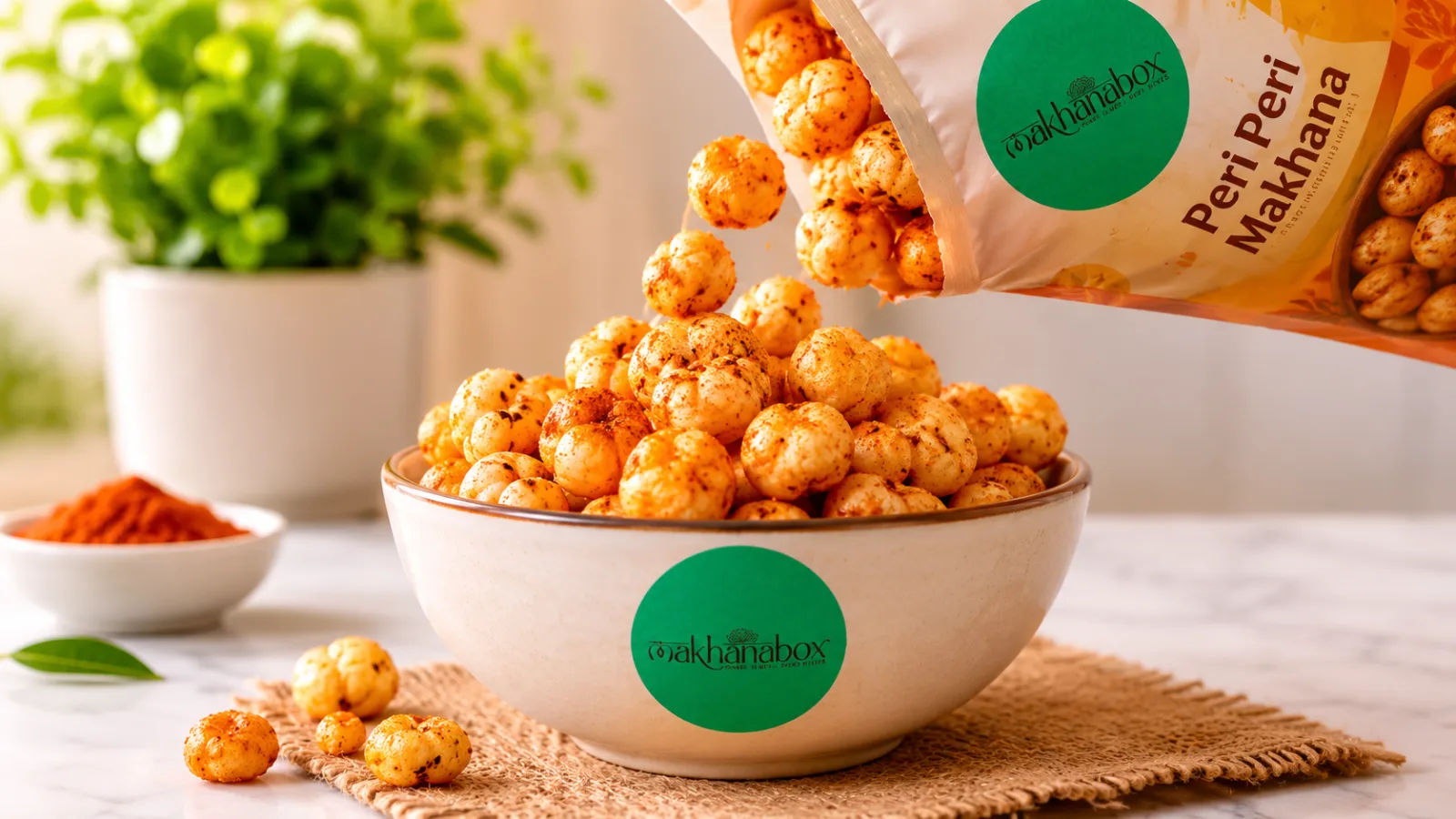
Many people recognise makhana from Indian kitchens, but not everyone knows that it is also commonly called fox nuts. The ingredient appears in a range of traditional preparations, from savoury dishes to sweets and snack recipes. In recent years, it has also become available in more convenient, flavoured snack formats.
For someone discovering makhana for the first time, understanding the ingredient can make it easier to choose between raw, roasted and seasoned varieties. It also explains how a traditional ingredient can be enjoyed in different ways, including as peri peri makhana.
What exactly is makhana?
Makhana is commonly known as fox nuts and is associated with the seeds of the prickly water lily plant. It is widely recognised as a traditional food ingredient in parts of India, particularly Bihar, where makhana cultivation and processing are important.
The ingredient is sold in different forms. Raw makhana is used in cooking and homemade preparations, while roasted makhana is often served as a snack. Flavoured varieties introduce seasoning to the roasted form, giving customers more choices.
Although people sometimes use the terms fox nuts and lotus seeds interchangeably in everyday conversation, product descriptions and labels should be checked carefully to understand the exact ingredient being sold.
How is makhana used in Indian kitchens?
Makhana has a place in several types of Indian food preparation. It can be added to curries, cooked into traditional dishes or used in sweet recipes. Some households also roast it at home and season it according to their preferences.
Its versatility is one reason it remains familiar to many consumers. A household that buys raw makhana for cooking may use it differently from someone who purchases a ready-seasoned snack.
Raw makhana is more suitable when a recipe requires preparation. Roasted or flavoured makhana is more convenient when the customer wants a snack that can be served with little additional work.
From traditional ingredient to flavoured snack
Food preferences change, and familiar ingredients are often presented in new ways. Makhana is one example. Alongside plain and traditionally prepared versions, customers can find flavoured varieties designed for people who enjoy ready-seasoned snacks.
Peri peri makhana combines the familiar makhana ingredient with a spicy seasoning profile. The result is different from plain roasted fox nuts, which usually have a milder taste.
The exact flavour depends on the seasoning used by the product manufacturer. Customers who want to know whether a product contains particular spices or other ingredients should read its ingredient list rather than relying on the flavour name alone.
What is the difference between raw, roasted and flavoured makhana?
These forms serve different purposes.
Raw makhana: This form is generally selected for cooking and homemade recipes. It requires preparation according to the recipe.
Roasted makhana: Roasting changes the texture and makes it suitable for serving as a snack. Some customers prefer it plain, while others add their own seasoning.
Flavoured makhana: This is a seasoned variety intended to offer a particular taste. It may be suitable for people who prefer a ready-flavoured snack rather than preparing their own seasoning.
Understanding these differences can prevent a common online shopping mistake: ordering raw ingredients when the intended purchase is a ready-to-eat snack.
Why do customers choose different flavours?
Taste is personal. Some people enjoy the mild character of plain roasted makhana, while others prefer stronger savoury flavours. A flavoured variety gives customers a way to explore different tastes without changing the underlying ingredient.
Peri peri seasoning may appeal to people who enjoy spicy snacks. Other customers may prefer a simpler flavour or choose raw makhana for their own recipes.
There is no need to treat one variety as suitable for everyone. The best choice depends on how the product will be used and the customer's flavour preferences.
Exploring peri peri makhana
Customers interested in a seasoned option can explore the Makhana Box peri peri product page to review the available details: https://makhanabox.com/flavours/peri-peri
Before ordering, it is useful to check the product description, ingredients, pack quantity and storage information. These details help customers understand what they are purchasing.
Final thoughts
Makhana is more than a single snack format. It is a traditional ingredient that can be used in cooking, roasted at home or enjoyed in flavoured varieties. Understanding the difference between raw, roasted and seasoned forms helps customers select the right option for their needs.
For those who enjoy a spicy flavour, Makhana Box offers a peri peri variety to explore at https://makhanabox.com/flavours/peri-peri. Checking the product details is the best way to decide whether it matches individual preferences.