

Pressure Washer Nozzles: A Practical Guide to Choosing the Right Type
Learn how pressure washer nozzles affect spray patterns, cleaning performance, and different pressure washing applications.

Matthew Robinson
Author & Contributor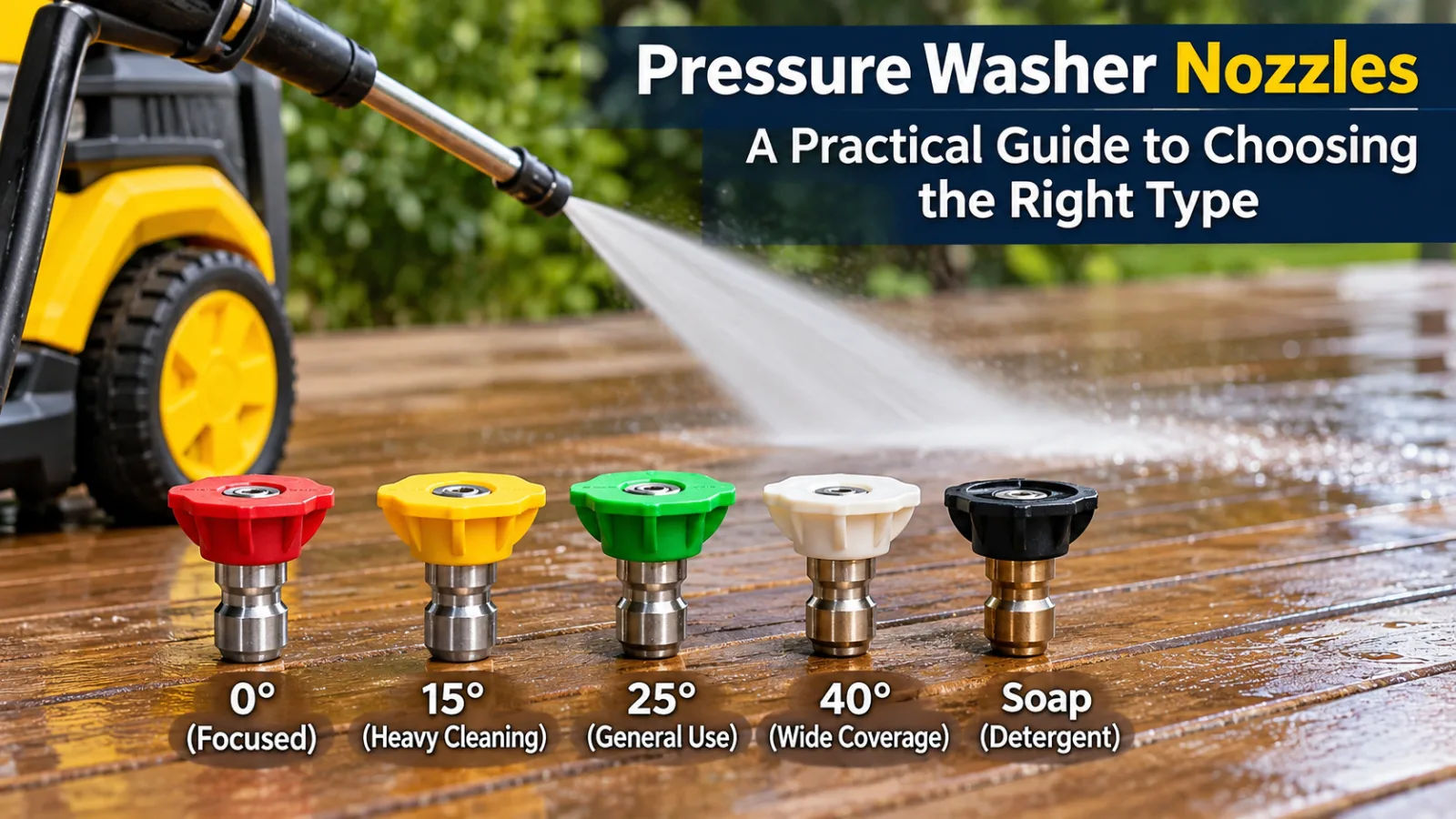
Pressure washer nozzles play an important role in controlling how water leaves a pressure washer. Different nozzle types can change the spray angle, coverage, and concentration of the water stream. Choosing an appropriate nozzle can make cleaning more efficient while helping users match the spray pattern to the surface and cleaning task.
Understanding how pressure washer nozzles work is especially useful when cleaning driveways, patios, siding, outdoor furniture, vehicles, and other exterior surfaces. Instead of using the same spray pattern for every job, users can select a nozzle based on the amount of coverage and cleaning concentration required.
How Pressure Washer Nozzles Work
A pressure washer nozzle controls the final spray pattern produced by the machine. A narrower spray generally concentrates the water into a smaller area, while a wider spray distributes it across a larger surface.
This difference can affect how a pressure washer performs during a cleaning task. Concentrated sprays may be useful when working on stubborn buildup on suitable durable surfaces. Wider patterns can provide more coverage when cleaning larger areas or surfaces that require a less concentrated approach.
Users looking for different pressure washer nozzles and related options can explore pressure washer nozzles according to their equipment and intended application.
Understanding Different Spray Patterns
Pressure washer nozzles are commonly available in different spray configurations. Each pattern is intended to distribute water differently, so selecting a nozzle should depend on the surface and cleaning requirement.
A narrow spray focuses cleaning action on a smaller area. Medium-width patterns offer a balance between concentration and coverage. Wider sprays distribute water across a broader area and can be useful for general rinsing and larger surfaces.
Because equipment and applications vary, users should always check the pressure washer and nozzle information before use.
Choosing a Nozzle for the Cleaning Surface
The surface being cleaned should be one of the main considerations when selecting a nozzle. Concrete and other durable materials may tolerate a different spray approach than painted, finished, wooden, or otherwise sensitive surfaces.
Starting with a less concentrated spray can be a sensible approach when working with an unfamiliar surface. The nozzle can then be selected or adjusted according to the cleaning requirements and equipment instructions.
Testing the spray on a small, inconspicuous area can also help determine whether the selected setup is appropriate before cleaning a larger section.
Nozzle Compatibility Matters
Not every nozzle is necessarily suitable for every pressure washer. Connection type, equipment requirements, operating specifications, and intended application should all be considered.
Before selecting a replacement or additional nozzle, users should review the pressure washer manufacturer's information and the specifications provided for the accessory. This helps avoid choosing an accessory simply because it looks similar to an existing component
