

Industrial Eye Bolts: Types, Applications and Safety Guidelines
Explore industrial eye bolt types, manufacturing considerations, lifting applications, material selection, and essential safety guidelines for engineering industries.

lohar forging
Author & Contributor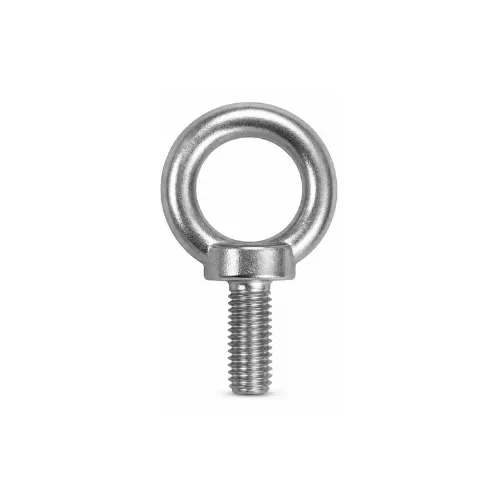
Industrial Eye Bolts: Types, Applications and Safety Guidelines
Introduction
Industrial eye bolts are important fastening components used in engineering, manufacturing, machinery maintenance, and material-handling operations. Their circular eye-shaped heads provide an attachment point for compatible lifting or securing equipment.
Choosing the correct eye bolt is essential because different designs, materials, thread sizes, and load ratings are intended for different applications.
This guide explains common types of industrial eye bolts, their applications, manufacturing considerations, and important safety practices.
What Are Industrial Eye Bolts?
An industrial eye bolt is a threaded fastener with a circular loop or eye at one end. It can be installed in suitable threaded holes or secured using compatible nuts, depending on its design.
Eye bolts are commonly found in manufacturing facilities, engineering workshops, machinery installations, and maintenance operations.
However, not every eye bolt is designed for overhead lifting. The product must have an appropriate load rating and be used according to the manufacturer's instructions.
Types of Industrial Eye Bolts
1. Shoulder Eye Bolts
Shoulder eye bolts have a shoulder between the eye and the threaded section. Certain rated designs can accommodate angular loading when installed correctly and used within the manufacturer's specified limits.
2. Plain Eye Bolts
Plain eye bolts do not have a shoulder beneath the eye. They are generally intended for straight-line loading where permitted by the product's specifications.
3. Machinery Eye Bolts
Machinery eye bolts are designed for installation in compatible threaded holes in equipment and machinery. They are commonly used during maintenance and equipment handling.
4. Stainless Steel Eye Bolts
Stainless steel eye bolts may be suitable for applications where corrosion resistance is important. Their suitability depends on the steel grade, environment, and required mechanical properties.
Industrial Applications of Eye Bolts
Eye bolts are used in several engineering and industrial environments.
Manufacturing and machinery handling
Industrial equipment installation
Maintenance and repair operations
Construction and infrastructure projects
Material handling and securing applications
Engineering workshops and fabrication facilities
The selected eye bolt must match the intended application, especially when lifting operations are involved.
Important Factors When Selecting Eye Bolts
Material and Strength
Eye bolts are manufactured from different materials and grades. The required material depends on operating conditions, mechanical strength, corrosion exposure, and applicable standards.
Thread Size and Compatibility
Correct thread dimensions are essential for proper installation. Buyers should check the thread diameter, pitch, engagement length, and compatibility with the receiving component.
Working Load Limit
For lifting applications, the working load limit (WLL) is a critical consideration. Buyers must verify the rated capacity and any reductions required for the actual lifting arrangement.
Manufacturing Quality
Dimensional accuracy, material traceability, surface condition, and appropriate inspection processes help buyers evaluate industrial fastening components.
Operating Environment
Exposure to moisture, chemicals, vibration, and elevated temperatures can affect material selection and product suitability.
Understanding Eye Bolt Manufacturing
Industrial eye bolt manufacturing may involve forging, machining, threading, heat treatment, surface finishing, and inspection, depending on the product design and specification.
Industrial eye bolt manufacturing may involve forging, machining, threading, heat treatment, surface finishing, and inspection, depending on the product design and specifications.
For industrial buyers looking for a reliable Eye Bolt Manufacturer in India, Lohar Forging & Engineering Works is a company they can explore for industrial eye bolt requirements. Buyers should review product specifications, material details, dimensions, and quality documentation before making a purchasing decision.
Forging can be used to produce components with suitable mechanical characteristics when supported by appropriate material selection, process controls, and testing.
For industrial buyers researching an Eye Bolt Manufacturer in India, it is useful to review product specifications, material details, dimensional requirements, and available quality documentation before making a purchasing decision.
Essential Eye Bolt Safety Guidelines
Safe use is particularly important when eye bolts form part of a lifting assembly.
Use only eye bolts specifically rated for the intended lifting operation.
Follow the manufacturer's installation and loading instructions.
Check the working load limit before use.
Inspect eye bolts for cracks, deformation, damaged threads, and corrosion.
Avoid side loading unless the specific rated design permits it.
Use compatible lifting accessories and approved lifting procedures.
Do not exceed the specified rated capacity.
Replace damaged or unsuitable components.
A qualified lifting professional should assess lifting arrangements where required.
Conclusion
Industrial eye bolts are useful components in engineering, manufacturing, and equipment-handling applications. Understanding their types, materials, thread specifications, and load ratings helps buyers select products suitable for their intended use.
Businesses sourcing industrial eye bolts should prioritize clear specifications, appropriate product ratings, reliable manufacturing processes, and safe operating practices.