

How to Start Writing and Publishing Blogs Online: A Beginner's Guide
Learn how to start writing and publishing blogs online with simple steps. Choose a blogging platform, write your first post, and reach more readers.

Postnest
Author & Contributor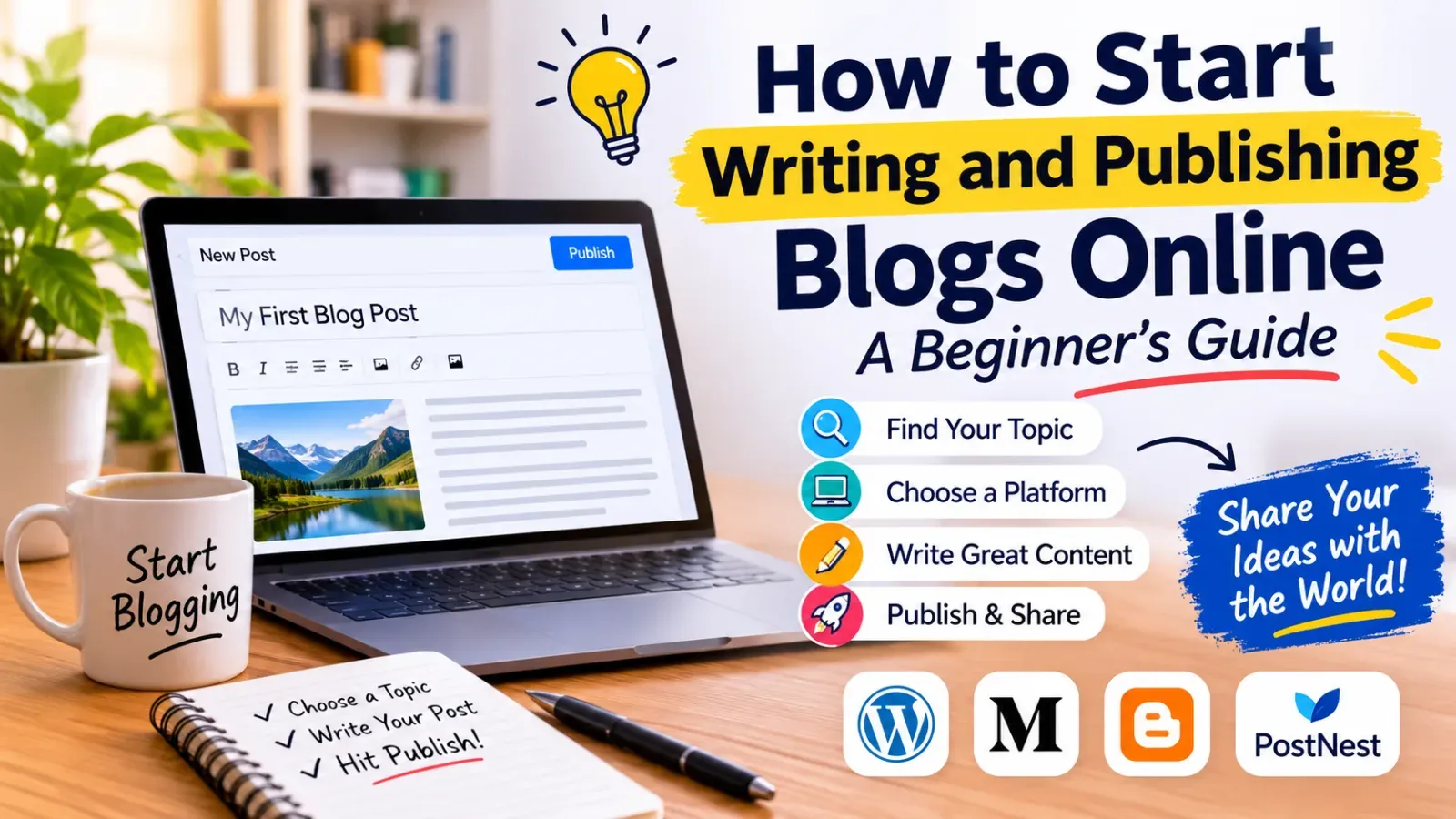
Have you ever wanted to share your thoughts, experiences, or knowledge with people online? Starting a blog is one of the easiest ways to do that. You do not need to be a professional writer, have a large audience, or know how to build a website from scratch. You just need an idea, a little time, and the right place to publish your writing.
Learning how to start writing and publishing blogs online can open up many opportunities. You can share what you know, connect with people who have similar interests, build your online presence, and even work toward earning money from your content.
The best part is that you can begin with little or no experience.
In this guide, you will learn how to choose a blogging topic, find the right platform, write your first post, and publish it online. Whether you want to write about technology, travel, lifestyle, education, or personal experiences, these steps will help you get started.
1. Decide What You Want to Write About
Before choosing a blogging platform, think about what you want to share with readers.
You do not have to write about everything. Starting with a few topics can make writing easier and help readers understand what your blog is about.
Here are some popular blog topics you can explore:
Technology: Share information about useful apps, software, gadgets, and new technology.
Lifestyle: Write about daily routines, personal experiences, home organization, and simple living.
Travel: Share travel experiences, destination guides, and helpful travel tips.
Education: Explain useful subjects, learning resources, and study tips.
Personal finance: Write about budgeting, saving money, and managing everyday expenses.
Health and fitness: Share general wellness information, exercise routines, and healthy habits.
Choose a topic you enjoy learning about. It will be easier to keep writing when you are interested in what you share.
You can also explore related topics as your blog grows. Just make sure your content remains useful to the people you want to reach.
2. Choose a Blogging Platform
Once you have selected your topic, the next step is finding a place to publish your writing.
A blogging platform allows you to create posts, organize your content, and make your articles available to readers. Some platforms are beginner-friendly, while others offer more control over your website.
Here are a few options worth exploring.
WordPress
WordPress is a popular option for people who want more control over their blogs. It offers different ways to create and manage content, customize a website, and add features as the blog grows.
It can be a good choice if you plan to build a long-term blogging website.
Medium
Medium is a writing platform where people can publish articles and discover stories from other writers.
It is useful for beginners who want to focus on writing instead of managing a complete website. You can publish articles on topics such as technology, business, personal experiences, and lifestyle.
Blogger
Blogger is a straightforward blogging service from Google. It allows users to create a blog and publish posts without building a website from scratch.
It can be a starting point for people who want to understand how online blogging works.
Substack
Substack is designed around publishing written content and building an audience through email newsletters.
It may suit writers who want to share regular articles, personal insights, and updates directly with subscribers.
PostNest
PostNest is another option for people who want a simple place to publish and share their ideas.
You can explore PostNest if you are looking for a blogging platform where you can share your writing and connect with readers.
Before selecting any platform, consider how easy it is to use, what publishing features it offers, and whether it fits your future blogging goals.
3. Find Ideas for Your First Blog Post
One common problem beginners face is deciding what to write about.
You may have several interests but still struggle to choose your first topic. A good way to solve this problem is to think about questions people ask about your chosen subject.
For example, if you enjoy technology, you could write about:
Best free apps for everyday productivity
How to protect your online accounts
Useful technology tools for students
Simple ways to organize digital files
If you enjoy lifestyle topics, you could write about:
Easy ways to organize a small home
Simple habits for a productive morning
How to manage your weekly schedule
Practical tips for saving money
You can also use Google search suggestions, online communities, and conversations with other people to understand what readers want to know.
Choose one specific question and create an article that answers it clearly.
4. Write Your First Blog Post
You do not need advanced writing skills to create a useful blog post. Focus on explaining your topic in a way that readers can understand.
A simple blog post structure can help you get started.
Create a Clear Title
Your title should tell readers what they will learn from your article.
For example, instead of writing "My Thoughts About Blogging," use a more helpful title such as "How to Start a Blog as a Beginner."
Write an Interesting Introduction
The introduction should explain the problem or question your article will address.
Try to connect with readers by describing a situation they may recognize. Avoid making the introduction unnecessarily long.
Organize Your Content With Headings
Break your article into smaller sections using relevant headings.
This makes your content easier to read, especially for people browsing on their phones.
Use Simple Language
Write as if you are explaining something to a friend.
Avoid complicated words when a simple explanation works. Use short paragraphs and give examples whenever they help readers understand an idea.
Add Useful Information
Do not write just to make your article longer. Every section should offer something useful.
You can include practical steps, examples, personal experiences, and answers to common questions.
Finish With a Helpful Conclusion
Your conclusion should remind readers of the main lesson and explain what they can do next.
A good ending makes your article feel complete.
5. Make Your Blog Post Easy to Find on Google
Publishing an article is only one part of blogging. You also want people to discover it through search engines.
This is where basic SEO, or search engine optimization, becomes useful.
You do not need to be an SEO expert to follow a few good practices.
Choose a relevant keyword: Think about the words people might search for when looking for your article.
Use the keyword naturally: Include your main keyword in the title, introduction, and other relevant parts of the article. Do not repeat it unnecessarily.
Write useful headings: Use clear headings that explain what each section covers.
Create a helpful meta description: Write a short summary that tells searchers what they can expect from your article.
Add relevant internal links: Link to other useful articles on your website when they provide additional information.
Use descriptive image names and alt text: Help readers and search engines understand what your images show.
Most importantly, write for people first. An article that answers a real question is more useful than one filled with repeated keywords.
6. Add Images to Make Your Blog More Interesting
Images can make a blog post easier to understand and more enjoyable to read.
For example, a travel article can include destination photos, while a technology guide can use screenshots or simple illustrations.
Here are a few ways to use images in your articles:
Add a relevant featured image.
Use screenshots when explaining a process.
Include images that support the topic.
Write descriptive alt text for accessibility.
Make sure you have permission to use the images you publish.
Avoid adding images just to fill space. Each image should have a purpose.
7. Publish Your First Blog Post
After writing and checking your article, you are ready to publish it.
The exact process depends on the platform you choose, but most blogging websites follow similar steps.
Create an account on your chosen blogging platform.
Open the writing or editor section.
Add your article title.
Paste or write your blog content.
Format the article with headings and paragraphs.
Add a featured image if supported.
Review your article for spelling and formatting mistakes.
Click the Publish button.
Before publishing, preview your article on both desktop and mobile screens.
Check that the headings look correct, links work, and images load properly.
Once everything looks good, publish your article.
Congratulations! Your first blog post is now online.
8. Share Your Blog With More Readers
After publishing, you can start sharing your article with people who may find it useful.
Do not expect a large number of visitors immediately. Building an audience takes time, and sharing your content regularly can help more people discover your work.
Here are some simple ways to promote your blog:
Social media: Share your articles on platforms where your target readers spend time.
Online communities: Participate in relevant communities and share your content when it genuinely helps answer a question.
Email newsletters: Send new articles to readers who choose to subscribe.
Guest posting: Write useful articles for other websites that accept contributions.
Internal linking: Connect your new articles with older, related posts.
Focus on reaching people who are genuinely interested in your topic instead of sharing links everywhere.
9. Keep Writing and Improve Your Blog
Your first article does not have to be perfect. Writing improves with practice, feedback, and experience.
Instead of trying to publish many articles at once, create a realistic writing schedule.
For example, you could start by publishing one useful article every week.
As you continue writing, pay attention to:
Which topics receive more attention.
What questions readers ask.
Which articles bring visitors from Google.
How long readers spend exploring your content.
What you can improve in your next article.
You can use tools such as Google Search Console to understand how your website performs in Google Search.
Over time, these small improvements can help you create a more useful blog and build a stronger online presence.
10. Can You Earn Money From Blogging?
Yes, blogging can become a source of income, but it usually takes time and consistent effort.
Your earning opportunities depend on your content, audience, chosen platform, and the methods you use.
Some common ways bloggers earn money include:
Advertising: Display ads on your website and earn revenue when eligible visitors view or interact with them.
Affiliate marketing: Recommend relevant products or services and earn a commission when readers make qualifying purchases through your links.
Sponsored content: Work with brands that pay you to create content about their products or services. Always disclose sponsored relationships.
Digital products: Sell ebooks, templates, guides, or other digital resources related to your topic.
Services: Use your blog to showcase your knowledge and attract opportunities for freelance writing, consulting, or other professional services.
You do not need to focus on making money from your first article. Start by creating useful content and understanding your audience.
Common Mistakes Beginners Should Avoid
When starting an online blog, a few mistakes can make the experience more difficult than it needs to be.
Here are some things to avoid:
Writing without a clear topic: Choose subjects that make sense for your audience.
Copying other articles: Create original content and share your own explanations and experiences.
Ignoring readers: Think about what people want to learn instead of writing only about what you want to say.
Overusing keywords: Keep your writing natural and easy to understand.
Publishing without proofreading: Check your article before making it public.
Giving up too early: It takes time to build a collection of useful articles and attract regular readers.
Avoiding these mistakes can help you develop better writing habits from the beginning.
Frequently Asked Questions (FAQs)
1. How can I start writing and publishing blogs online?
Choose a topic you enjoy, select a blogging platform, create your first article, and publish it. You can start with a free blogging platform and improve your writing as you gain experience.
2. Can I publish blogs online for free?
Yes. Several platforms, including Blogger and Medium, allow users to publish content without paying for a basic publishing account. Check each platform's current features and terms before choosing one.
3. Do I need writing experience to start a blog?
No. You can start blogging without professional writing experience. Begin with topics you understand, use simple language, and practice regularly.
4. Which blogging platform is best for beginners?
The best platform depends on your goals. Medium can suit writers who want to focus on articles, Blogger offers a straightforward starting point, and WordPress provides more website control. PostNest is also worth exploring if you want a place to publish and share ideas.
5. How often should I publish new blog posts?
There is no fixed publishing schedule for everyone. Beginners can start with one quality article per week or another schedule they can maintain comfortably.
6. How long does it take to get readers for a new blog?
There is no guaranteed timeline. It depends on your topic, content quality, competition, promotion, and search visibility. Focus on publishing helpful articles consistently rather than expecting immediate traffic.
Conclusion
Starting an online blog does not have to be complicated. You can begin with a topic you enjoy, choose a suitable blogging platform, and publish your first article without having years of writing experience.
The most important part of learning how to start writing and publishing blogs online is taking that first step. Focus on helping readers, keep your language simple, and improve your articles with every new post.
You do not need to wait until everything is perfect to start sharing your ideas.
If you are ready to publish your thoughts, experiences, or knowledge, explore PostNest and take the first step toward sharing your writing online.