
How to Start a Blog in the USA: A Simple Guide for Beginners
Learn how to start a blog in the USA with this beginner-friendly guide to blogging platforms, domain names, SEO, content creation, and monetisation.
Priyanshi
Author & Contributor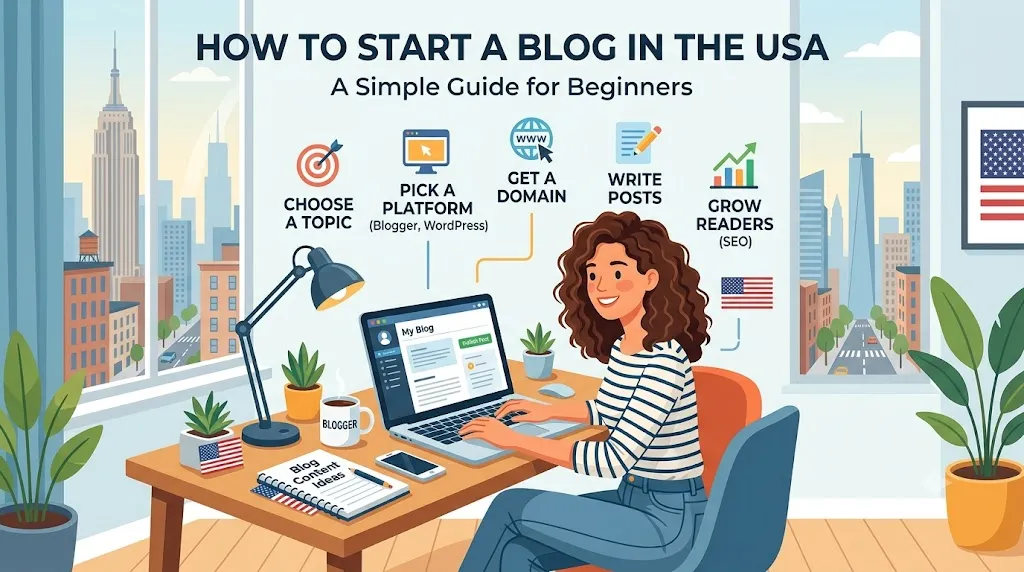
How to Start a Blog in the USA: A Simple Guide for Beginners
Have you ever wanted to share your ideas, teach people something useful, or write about a topic you enjoy? Starting a blog is one way to do that. You do not need to be a professional writer or know how to code before you begin. With a clear topic, a suitable blogging platform, and a little patience, you can build a blog from scratch.
If you are wondering how to start a blog in the USA, this guide will walk you through the process step by step. You will learn how to choose a topic, select a blogging platform, create your website, write your first article, attract readers, and explore ways to earn money from your content.
Whether you want to start a personal blog, share your knowledge, build a professional portfolio, or eventually create an online business, the first steps are simpler than you might think.
1. Decide What You Want to Blog About
Before choosing a website or buying a domain, think about what you want to write about. A clear topic makes it easier to plan articles and attract readers who are interested in your content.
You do not need to choose a topic that nobody has covered before. Instead, look for an area where you have useful knowledge, personal experience, or a genuine interest in learning more.
Here are some popular blog topics to consider:
Technology: Apps, software, AI tools, and beginner-friendly technology guides.
Education: Study tips, online learning resources, and educational websites.
Personal finance: Budgeting, saving money, and basic financial education.
Food and lifestyle: Simple recipes, daily routines, and practical lifestyle advice.
Travel: Travel planning, local experiences, and destination guides.
Personal development: Productivity, time management, and learning new skills.
For example, if you enjoy technology, you could write articles explaining how useful apps work or comparing tools for beginners. If you enjoy writing about everyday experiences, a personal blog may be a better starting point.
Tip: Choose a topic you can continue writing about for several months. A blog becomes easier to manage when you have a clear direction.
2. Choose a Blogging Platform
A blogging platform is the tool you use to create, publish, and manage your articles. Some platforms are designed for beginners, while others offer more control over website design and technical features.
When choosing a platform, consider your budget, technical skills, design preferences, and long-term goals.
Free blogging platforms
If you are starting with a small budget, a free platform can help you learn the basics before spending money.
For example, Blogger lets you create a blog and publish posts without setting up your own hosting. You can choose a blog name and address through its dashboard.
You can also explore PostNest as an option for publishing and sharing your ideas online.
Self-hosted blogging websites
If you want more control over your website, you can explore a self-hosted option such as WordPress.org. This approach generally requires a hosting service and a domain name, and you may need to handle updates, backups, and other maintenance tasks.
A self-hosted blog can offer more flexibility, but it may require additional setup and ongoing costs.
How do you choose the right platform?
Ask yourself a few simple questions:
Is it easy to write and publish articles?
Can you customise the design?
Can you use your own domain name?
Does it provide the features you need?
Will the cost remain manageable as your blog grows?
You do not need to choose the most complicated platform. Start with something that meets your current needs and allows you to publish useful content consistently.
3. Pick a Blog Name and Domain Name
Your blog name is part of your identity online. It should be easy to remember, relevant to your topic, and simple to spell.
For example, a blog about beginner-friendly technology could use a name that suggests learning, discovery, or practical advice.
Before deciding on a name, check whether it is already being used by another website or business. Also consider whether matching social media usernames are available if you plan to promote your articles there.
A domain name is the address people use to visit your website, such as example.com.
What makes a good domain name?
A good domain name should be:
Short enough to remember easily.
Simple to spell and pronounce.
Relevant to your brand or topic.
Free from unnecessary numbers and confusing punctuation.
Available to register without infringing on another brand's rights.
A .com domain is a familiar option for a blog targeting readers in the United States, but it is not a guarantee of better Google rankings. Choose a name that works for your audience and brand.
You can check domain availability through a domain registrar before purchasing one.
4. Set Up Your Blog Website
Once you have chosen a platform and name, it is time to set up your blog.
The exact steps depend on the platform you use, but the general process is similar.
Create an account on your chosen blogging platform.
Choose a blog name and available address.
Select a clean, readable design.
Add your logo or a simple text-based brand identity.
Create the main pages readers may need.
Check how the website looks on a mobile phone.
Publish your first article when everything is ready.
Your design does not need to be perfect on day one. Focus on making the website easy to navigate and the articles comfortable to read.
Which pages should a new blog have?
Consider creating these basic pages:
About: Explain what your blog covers and who it is for.
Contact: Give readers a way to reach you.
Privacy Policy: Explain how personal information is collected and used, where applicable.
Terms of Use: Set out the terms that apply to using your website, where appropriate.
If you plan to publish sponsored content, use affiliate links, or collect email addresses, make sure you understand the relevant disclosure and privacy requirements for your audience and location.
5. Write Your First Blog Post
Now comes the most important part: creating content that helps readers.
Your first article does not have to be perfect. It should answer a clear question, explain something useful, or help readers solve a problem.
Start by choosing a topic related to your blog's main subject. For example, a technology blog might publish an article about free tools for beginners. A personal finance blog might explain how to create a monthly budget.
How to structure a blog post
A simple article structure makes writing easier:
Title: Tell readers what they will learn.
Introduction: Explain the topic and why it matters.
Main sections: Break the subject into clear headings and practical explanations.
Examples: Use examples to make difficult ideas easier to understand.
Conclusion: Summarise the most useful points and suggest a sensible next step.
FAQs: Answer common questions that readers may still have.
Write as if you are explaining the topic to someone who is new to it. Use short paragraphs, clear language, and examples where they add value.
Avoid adding unnecessary information just to make an article longer. A helpful article is more valuable than a long article that repeats the same points.
6. Learn Basic SEO to Reach Readers in the USA
Search engine optimisation, or SEO, helps search engines understand your content and helps people discover your articles through search results.
If your goal is to attract readers in the United States, focus on the questions and problems those readers want to solve. Do not simply add the phrase "in the USA" to every title. The content itself should be relevant to the intended audience.
Find keywords people might search for
A keyword is a word or phrase people use when searching online.
For example, a beginner blogging website might target phrases such as:
How to start a blog in the USA
Best free blogging platforms for beginners
How to write your first blog post
Free websites to publish articles online
How to choose a domain name for a blog
Use tools such as Google Trends to compare interest in topics and Google Search Console to monitor your website's search performance after it is indexed.
Google Trends shows relative interest rather than exact monthly search volume. Validate promising keywords before investing time in a full article.
Follow simple on-page SEO practices
For each article:
Use the main keyword naturally in the title and introduction.
Organise the article with useful H2 and H3 headings.
Include related phrases where they fit the explanation.
Write a clear, unique meta description.
Use descriptive URLs.
Add relevant internal links to other useful articles.
Include images that support the content and have descriptive alternative text.
Make sure the page loads and reads well on mobile devices.
Do not repeat the same keyword unnaturally. Google recommends creating helpful, reliable, people-first content rather than writing primarily to manipulate search rankings.
You can read Google's official SEO Starter Guide for more information.
7. Publish Consistently and Build a Content Plan
Many new bloggers publish one or two articles and then struggle to decide what to write next. A simple content plan can help you avoid that problem.
Start by writing down 15–20 questions your target readers might ask. Group similar questions together and turn them into article ideas.
For example, if your blog covers online publishing, your content plan might include:
How to start a blog for free.
How to write an engaging blog introduction.
Best free blogging platforms for beginners.
How to find blog topics.
How to improve the readability of blog posts.
How to promote a new blog.
You do not need to publish every day. Choose a schedule that you can maintain without sacrificing the quality of your articles.
Before publishing, check spelling, links, formatting, factual claims, and the overall reading experience. Update older articles when the information becomes outdated.
8. How to Get Readers to Your New Blog
Publishing an article is only the beginning. You also need to help interested people discover it.
Here are several practical ways to promote your blog.
Share articles on social media
Share useful articles on relevant social media platforms. Write a short introduction explaining what readers will learn rather than simply posting a link without context.
Participate in relevant communities
Join online communities where people discuss your topic. Answer questions genuinely and share your articles only when they are relevant and the community permits it.
Link related articles together
When two articles cover related subjects, add an internal link where it helps readers continue learning. This improves navigation and helps readers discover more of your content.
Build genuine relationships with other writers
Connect with bloggers and creators in your topic area. You might exchange ideas, contribute a guest article where permitted, or collaborate on useful resources.
Avoid buying spammy backlinks or publishing low-quality articles solely to obtain links. Focus on earning attention by producing content worth sharing.
Monitor your results
Google Search Console can help you understand which queries bring impressions and clicks to your website. Use that information to improve articles, identify related topics, and find pages that need better titles or more useful information.
Remember that indexing and ranking take time. Following SEO best practices does not guarantee that a new blog will rank at the top of Google.
9. Can You Make Money From a Blog in the USA?
Yes, blogging can become a source of income, but it usually takes time to build an audience and find a model that works. Earnings are not guaranteed, especially when a blog is new.
Here are several options to explore.
Display advertising
Advertising networks may pay publishers when eligible ads are displayed or receive engagement. Approval depends on the network's requirements, website quality, and other factors.
Affiliate marketing
You can recommend relevant products or services and earn a commission when readers make qualifying purchases through your links. Clearly disclose affiliate relationships near the recommendations so readers understand that you may earn a commission.
Sponsored articles
Businesses may pay for content that introduces their products or services to your audience. Sponsored content should be clearly identified, and claims should be accurate.
Digital products and services
Some bloggers sell ebooks, templates, courses, consulting, or other products related to their expertise.
Memberships
If you develop a loyal audience, you might offer premium articles, exclusive resources, or a paid community.
You do not need to use every monetisation method. Start by helping readers, then consider the options that suit your topic and audience.
10. Important Things to Know When Blogging for a US Audience
You do not necessarily need to live in the United States to publish a blog for US readers. However, targeting an audience in another country means you should pay attention to its needs and expectations.
Use relevant examples. Include local services, terminology, dates, or other details when they genuinely help the reader.
Check facts carefully. If you write about taxes, legal requirements, health, or personal finance in the United States, use reliable and current sources. Avoid giving broad advice that may not apply to every reader.
Be transparent. Identify sponsored content and disclose affiliate relationships clearly when required.
Respect privacy. If your website collects information from readers, understand the privacy obligations that apply to your activities and audience.
Do not pretend to be local. You can write useful content for US readers without claiming to live there or have personal experience you do not have.
The best way to build trust is to provide accurate, useful information and explain any important limitations.
Frequently Asked Questions
1. Can I start a blog in the USA for free?
Yes. Free blogging platforms such as Blogger allow you to create a blog without paying for a separate hosting plan. Free options may have limitations in customisation, branding, or features. You can upgrade later if your needs change.
2. Do I need to live in the USA to start a blog targeting American readers?
No. You can publish content for US readers from another country. Focus on answering their questions accurately and using examples that are relevant to them. Any business, tax, privacy, or monetisation obligations will depend on your circumstances.
3. How much does it cost to start a blog?
The cost depends on the platform and features you choose. A free platform may cost nothing to start, while a self-hosted website can involve domain registration, hosting, premium themes, or other optional services. Check the current prices before committing.
4. How long does it take for a new blog to rank on Google?
There is no fixed timeline. Some pages may begin appearing in search results relatively quickly, while others may take weeks or months to gain visibility. Results depend on factors such as content quality, competition, website accessibility, and the queries you target.
5. How many articles should I publish before promoting my blog?
You can promote your blog as soon as you have useful content worth sharing. Start with a few well-written articles that clearly explain your topic, then keep publishing at a sustainable pace. There is no magic number of posts required before promotion can begin.
6. What should I write about on my first blog?
Choose a question that your intended audience genuinely wants answered. A beginner-friendly guide, a practical tutorial, or an explanation of a common problem can be a good first article. Make sure the topic matches the overall purpose of your blog.
Final Thoughts
Learning how to start a blog in the USA does not require you to have everything figured out from the beginning. Start with a topic you care about, choose a suitable platform, create a clear website, and publish articles that help readers.
As your blog grows, learn the basics of SEO, share your work with relevant communities, and use real performance data to improve your content. Be patient with the process and focus on giving readers a reason to return.
You do not need to build a perfect website on your first day. You just need to take the first step, publish something useful, and keep learning as you go.