

How to Scale Your Wellness Brand with Private Label Supplement Manufacturing
Private label supplement manufacturing helps wellness brands scale their businesses without investing in expensive production facilities. This blog explores essential growth strategies, including product portfolio expansion, cost reduction, custom formulation, personalized branding, quality control, and inventory management. It also explains how contract manufacturing provides greater product flexibility and supports expansion into new sales channels and international markets. By partnering with a reliable supplement manufacturing company, wellness brands can streamline production, maintain product consistency, strengthen their market presence, and achieve sustainable business growth while building long-term customer trust.

Clara Christopher
Author & Contributor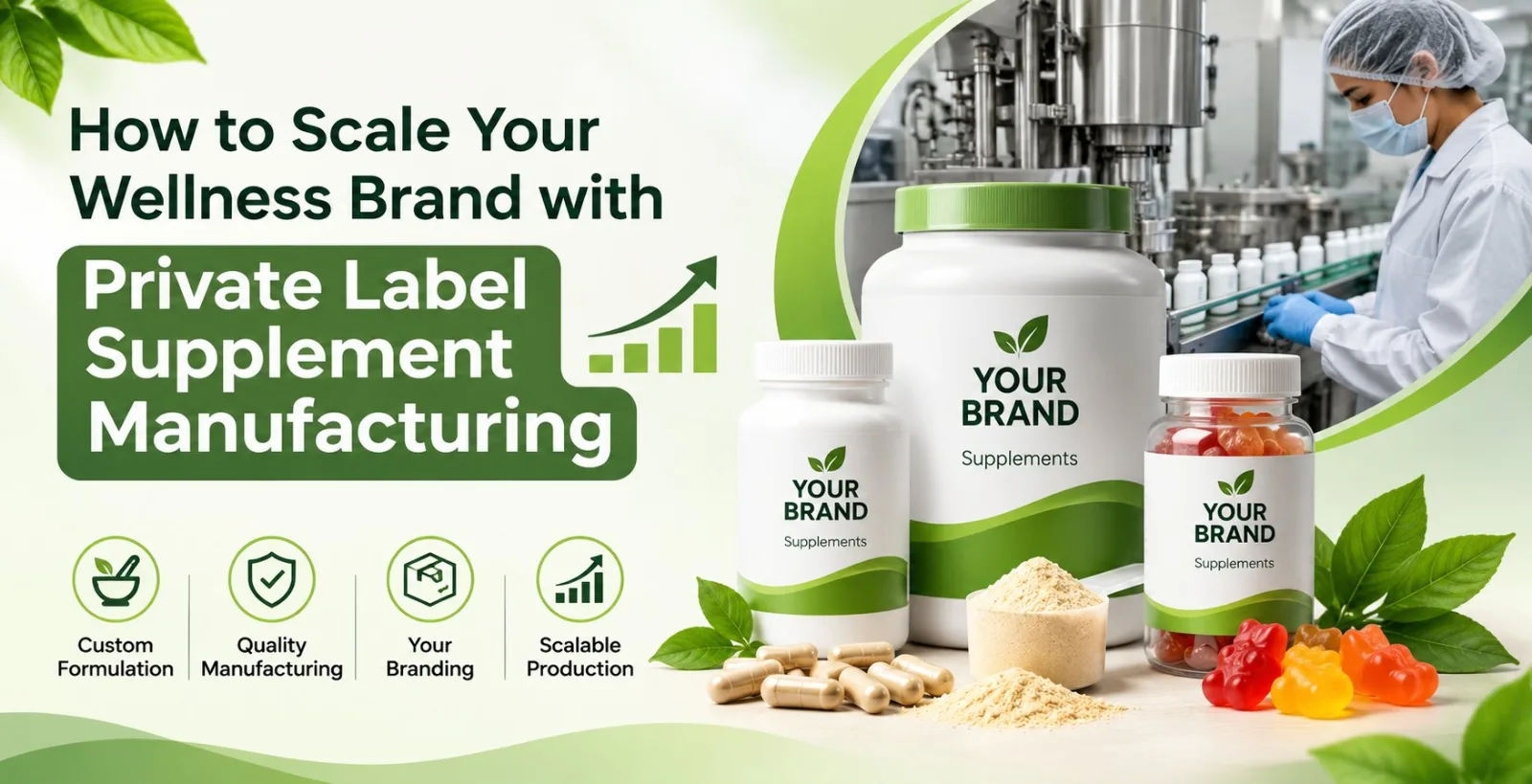
Growing a wellness brand requires more than introducing attractive products. Businesses must balance product quality, customer expectations, production costs, inventory management, and market expansion. Establishing an independent manufacturing facility can make this journey expensive and complicated. Private label supplement manufacturing offers an alternative by allowing businesses to outsource production while maintaining control over their brand identity. From developing a focused product portfolio to managing larger orders, the right manufacturing arrangement can support sustainable growth.
1. Build a Product Portfolio Around Customer Needs
Successful expansion begins with understanding what customers want. Instead of launching numerous supplements simultaneously, identify product categories that complement your existing offerings and address relevant consumer preferences. Consider customer feedback, purchasing patterns, competitor positioning, and opportunities within your target market. Popular product formats include capsules, gummies, powders, tablets, and liquid supplements. A private label manufacturing partner can help assess available formulations and suitable delivery formats. Start with a manageable selection of products, evaluate their performance, and gradually expand your portfolio based on actual demand rather than assumptions.
2. Reduce Investment in Manufacturing Infrastructure
Building a supplement production facility requires significant investment in machinery, premises, trained personnel, testing equipment, and operational systems. Outsourcing supplement manufacturing allows businesses to access established production capabilities without independently developing these resources. This arrangement can reduce initial capital requirements and provide greater flexibility when allocating budgets. Instead of committing substantial funds to equipment, wellness brands can invest in customer acquisition, product development, distribution, and brand awareness. Businesses should carefully evaluate manufacturing quotations, minimum order quantities, packaging expenses, storage costs, and payment terms to establish realistic budgets and maintain healthy cash flow.
3. Create a Distinctive Brand Through Customization
A recognizable brand identity helps wellness businesses differentiate themselves in a competitive marketplace. Private label supplement manufacturing allows companies to sell products under their own names and develop packaging that reflects their positioning. Depending on the manufacturer, customization may extend to ingredient combinations, serving sizes, flavors, capsule materials, and packaging formats. Brands can select options that align with their audience, pricing strategy, and distribution channels. Premium positioning might emphasize thoughtful packaging and transparent ingredient information, while value focused brands may prioritize practical formats. Always confirm customization capabilities, formulation ownership, development costs, and applicable labeling requirements before approving production.
4. Maintain Quality as Production Volumes Increase
Scaling a supplement business requires consistent product quality across successive manufacturing batches. A reliable production partner should maintain documented procedures for ingredient verification, hygienic processing, accurate measurements, finished product testing, and traceability. Ask potential manufacturers about their quality management systems, relevant certifications, testing methods, and procedures for addressing deviations. Review certificates of analysis and other supporting documentation where appropriate. Quality expectations should be established before production begins and monitored as order volumes grow. Consistent manufacturing practices can help reduce avoidable product issues and protect your brand reputation. The brand owner should also understand its own compliance responsibilities.
5. Manage Inventory With Flexible Production Planning
Effective inventory management becomes increasingly important as a wellness brand expands. Ordering excessive quantities can tie up working capital and increase the risk of products approaching their expiration dates. Conversely, insufficient stock can interrupt sales and disappoint customers. Discuss minimum order quantities, production lead times, ingredient availability, and reorder schedules with your manufacturing partner. Use historical sales information and promotional calendars to estimate future demand. Where available, smaller initial production runs can help validate new products before committing to larger quantities. Regular communication with manufacturers supports better planning and allows businesses to respond more effectively to changing market conditions.
6. Expand Into New Sales Channels and Markets
Private label supplement manufacturing can support expansion into online marketplaces, retail stores, pharmacies, wholesale networks, and direct consumer channels. Each sales channel may have different expectations regarding packaging, pricing, product documentation, and order fulfillment. Businesses should assess these requirements before introducing supplements to new audiences. International expansion also requires careful consideration of destination market regulations, permitted ingredients, labeling obligations, and import procedures. A capable manufacturing partner can provide relevant product documentation and production support, but businesses must independently verify that their products meet applicable requirements in each intended market.
7. Use Contract Manufacturing for Greater Product Flexibility
As wellness brands mature, they may require more specialized formulations or production arrangements. Contract manufacturing can provide opportunities to develop products according to detailed specifications, subject to technical feasibility and commercial agreements. While private label arrangements often include established formulations, contract services may accommodate more extensive product development. These models frequently overlap, and their exact scope depends on the agreement. Evaluate whether standard formulations or customized products better support your growth objectives. Discuss intellectual property rights, ingredient sourcing responsibilities, confidentiality, testing requirements, and production capacity before entering an agreement. Clear expectations help prevent misunderstandings and support long term collaboration.
8. Choose a Manufacturing Partner That Supports Growth
Selecting the right manufacturer is an important strategic decision. Look beyond initial pricing and assess production capabilities, communication practices, quality documentation, customization options, and capacity for larger orders. Request samples to evaluate product characteristics and packaging suitability before making substantial commitments. Discuss how the manufacturer handles supply disruptions, production delays, customer complaints, and changes to agreed specifications. Establish measurable expectations for delivery, quality, and service. A dependable partnership should accommodate evolving business requirements while maintaining agreed standards. Periodically reviewing manufacturing performance can help identify improvements and ensure that outsourced production continues to support your commercial objectives.
Conclusion
Private label supplement manufacturing provides a practical foundation for wellness brands seeking to expand their product ranges, strengthen market positioning, and manage production resources efficiently. By combining thoughtful product selection, reliable quality controls, strategic branding, and realistic inventory planning, businesses can create a scalable operational model. The choice between private label and contract manufacturing should reflect product requirements, available budgets, and growth ambitions. Ultimately, successful expansion depends on understanding customer needs, maintaining compliance, and developing a transparent relationship with a capable manufacturing partner. These foundations allow wellness businesses to pursue growth while protecting product integrity and customer trust.
