How to Become a Successful Blogger as a Beginner
Learn how to become a successful blogger as a beginner. Discover how to start blogging for free, write quality articles, use SEO, and grow with PostNest.

Tanvi Ladva
Author & Contributor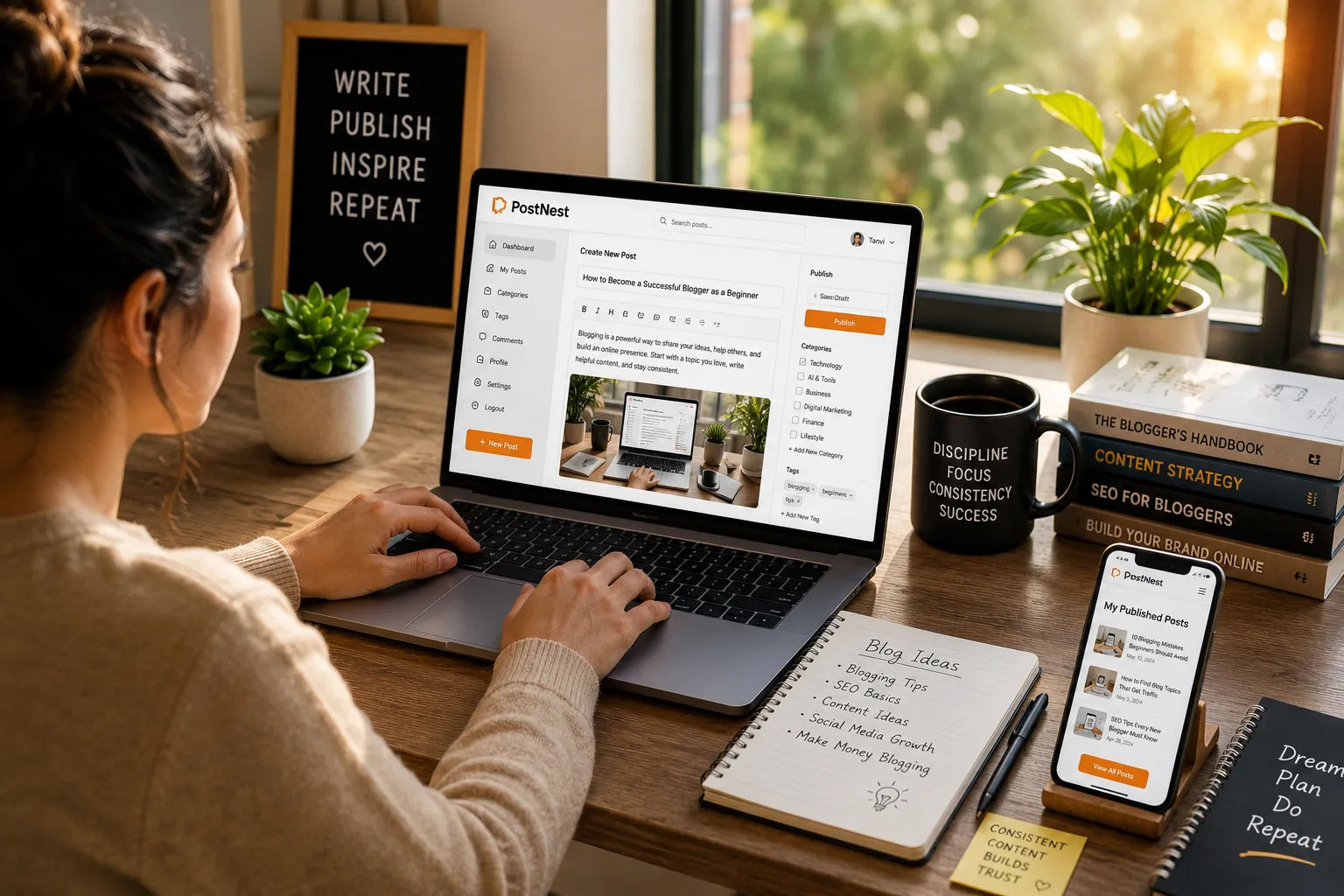
How to Become a Successful Blogger as a Beginner
Starting a blog can be one of the most rewarding ways to share your knowledge, express your ideas, and build an online presence.
Whether you enjoy writing about technology, business, lifestyle, education, finance, or personal experiences, blogging gives you an opportunity to turn your interests into valuable content that people can discover and read.
However, becoming a successful blogger is not just about writing articles. You also need the right publishing platform, a clear content strategy, consistency, and an understanding of what your readers want.
Many beginners delay starting because they think they need an expensive website, a custom domain, hosting, or professional writing experience.
The good news is that you don't need all of these things to publish your first article.
PostNest makes it easier for beginners to start blogging by providing a free publishing platform where anyone can create an account, write articles, and share knowledge without purchasing a separate domain or hosting.
In this guide, we will explain how to become a successful blogger as a beginner and how you can use PostNest to start and grow your blogging journey.
1. Understand Why You Want to Start Blogging
Before publishing your first article, understand what you want to achieve through blogging.
Different bloggers have different goals.
Some want to share personal experiences, while others want to educate readers, build professional credibility, promote their businesses, or eventually generate income.
Here are some common blogging goals:
Sharing knowledge and experiences.
Building an online presence.
Improving writing and communication skills.
Creating educational content.
Establishing expertise in a particular subject.
Reaching new audiences.
Building opportunities for future income.
Having a clear goal will help you decide what type of content to create and which topics to focus on.
You don't need to have everything planned from day one. Your goals can evolve as you gain experience.
2. Choose the Right Blogging Platform
Choosing a publishing platform is one of the first important decisions for a beginner.
Managing a website independently can involve domain registration, hosting expenses, website configuration, security, and regular maintenance.
These responsibilities can become overwhelming when your primary goal is simply to start writing.
This is where PostNest can help.
PostNest is a free blogging and article-publishing platform designed to make sharing knowledge easier.
You can create an account and start publishing articles without purchasing your own domain or hosting.
Why Start Blogging on PostNest?
Here are some reasons beginners can consider PostNest:
Free Article Publishing: Start publishing articles without paying for a separate blogging website.
No Domain or Hosting Required: You don't need to manage your own hosting infrastructure before getting started.
Multiple Content Categories: Explore subjects such as technology, AI and tools, business, digital marketing, finance, health and lifestyle, and entertainment.
No Reader Paywalls: Your published articles are accessible to readers without requiring a paid reading subscription.
Simple Publishing Experience: Spend more time writing and less time managing website infrastructure.
Opportunities for Online Visibility: Your published content can be shared with readers and may gain search engine visibility over time.
For someone starting their first blog, having a straightforward place to publish can make the entire process easier.
3. Select a Blogging Niche
A blogging niche is the main subject or area you want to write about.
Choosing a niche helps you develop a recognizable content direction and understand your target audience.
Some popular blogging niches include:
Technology
Write about programming, software development, AI tools, applications, and emerging technologies.
Business and Entrepreneurship
Share startup experiences, business ideas, productivity strategies, and entrepreneurial lessons.
Digital Marketing
Explore SEO, social media marketing, content marketing, and online business growth.
Finance
Write educational articles about budgeting, financial planning, saving, and money management.
Health and Lifestyle
Share general wellness information, lifestyle ideas, fitness experiences, and healthy habits using reliable sources.
Education
Publish learning resources, study techniques, career guidance, and educational tutorials.
PostNest supports multiple categories, making it possible to explore different interests while developing your blogging direction.
Beginner tip: Start with subjects you already understand or genuinely enjoy. Writing becomes easier when you are interested in the topic.
4. Learn How to Write Helpful Blog Articles
You don't need to be a professional writer to become a successful blogger.
What matters most is whether your articles provide useful information and communicate ideas clearly.
A beginner-friendly blog article should generally include:
An Interesting Title
Your title should explain what the article is about and encourage readers to explore it.
For example:
How to Start Blogging Without Spending Money.
10 Common Blogging Mistakes Beginners Should Avoid.
How to Improve Your Writing Skills.
Best Ways to Grow Your Online Audience.
A Helpful Introduction
Start by explaining the topic, the problem readers are facing, or what they will learn.
Avoid unnecessary introductions that delay the useful information.
Organized Headings
Divide your article into sections using H2 and H3 headings.
This makes longer articles easier to navigate.
Practical Information
Include examples, actionable tips, explanations, and relevant experiences.
A Meaningful Conclusion
Summarize the important points and give readers a clear next step.
When publishing on PostNest, focus on creating original, readable, and genuinely helpful content.
5. Publish Your First Article on PostNest
One of the biggest challenges for beginners is getting started.
Many people spend weeks planning their blog but never actually publish anything.
The easiest way to overcome this is to start with one simple article.
Here is a straightforward process:
Visit PostNest.
Create your account.
Explore the available blogging categories.
Choose a topic you understand.
Write your first article.
Add an appropriate title and relevant details.
Review your content for mistakes.
Publish your article.
Once your article is published, you have officially started your blogging journey.
Don't worry if your first article isn't perfect. Your writing will improve with practice.
6. Understand Basic SEO to Get Your Blog Discovered
Writing a good article is important, but readers also need ways to discover it.
Search engine optimization (SEO) helps improve the chances of your content appearing in relevant search results.
If you are blogging on PostNest, understanding basic SEO can help you create more discoverable content.
Follow these practices:
Research Keywords: Identify what people search for before choosing your article topic.
Use Keywords Naturally: Include your primary keyword in your title, introduction, and relevant sections without repeating it unnecessarily.
Write Descriptive Titles: Make your article title specific and relevant.
Create Proper Headings: Organize information with clear H1, H2, and H3 headings.
Write Meta Descriptions: Create a short summary explaining what readers will find in your article.
Use Relevant Tags: Add tags that accurately describe your content.
Link Related Articles: Connect relevant articles to help readers explore additional information.
Publish Original Content: Avoid copying articles from other websites. Share your own explanations, research, and experiences.
Remember, SEO takes time. Publishing on PostNest does not guarantee immediate rankings or traffic. Search visibility depends on multiple factors, including content quality, competition, indexing, and technical optimization.
7. Publish Consistently
Consistency is one of the most important habits for beginner bloggers.
You don't need to publish several articles every day.
Instead, create a realistic schedule that you can maintain.
For example:
DayBlogging ActivityMondayResearch a new topicTuesdayWrite an articleWednesdayEdit and publishThursdayResearch another topicFridayWrite a second articleSaturdayPublish and shareSundayReview progress and plan
Even publishing two useful articles every week can help you build a valuable content library over time.
Consistency also gives you more opportunities to improve your writing and understand your readers.
8. Share Your PostNest Articles and Reach More Readers
Publishing an article is only one part of blogging.
You should also make an effort to distribute your content and help interested readers discover it.
After publishing on PostNest:
Share your article links with relevant communities.
Include article links in your professional profiles.
Share useful article summaries on social media.
Discuss your content with people interested in the topic.
Create short educational posts based on your articles.
Encourage readers to explore related articles on PostNest.
For example, if you publish an article about beginner JavaScript concepts, you can share a short explanation of one concept along with the PostNest article link.
Avoid sharing links without context or repeatedly posting promotional messages in unrelated communities.
Focus on reaching people who will genuinely benefit from your content.
9. Explore Different Content Ideas
A common problem for new bloggers is running out of topics.
The easiest way to avoid this is to create a list of potential articles before you start publishing regularly.
Here are some beginner-friendly ideas:
Blogging and Content Creation
How to Start Blogging Without Spending Money.
Common Blogging Mistakes Beginners Should Avoid.
How to Write Your First Blog Article.
How to Improve Your Writing Skills.
Technology
Best AI Tools for Beginner Developers.
How to Learn JavaScript From Scratch.
React.js Concepts Every Beginner Should Understand.
How to Build Your First Website.
Business
How to Start a Small Online Business.
Business Ideas for Beginners.
Common Challenges Faced by New Entrepreneurs.
Digital Marketing
Introduction to SEO for Beginners.
How to Create a Content Marketing Strategy.
How to Grow an Online Audience.
You can publish articles across these subjects on PostNest according to your interests and preferred categories.
10. Track Your Blogging Growth
Becoming a successful blogger takes time, so it is important to understand your progress.
Instead of focusing only on the number of views, look at different aspects of your blogging journey.
Track:
Total published articles.
Article views and readership.
Returning readers.
Topics receiving more attention.
Search engine impressions.
Reader comments and engagement.
Improvements in writing quality.
If your analytics tools are connected and available, use them to understand how readers discover and interact with your content.
For example, if your technology articles consistently attract more readers than your general lifestyle articles, you may decide to create more technology-related content.
Use data to improve your strategy rather than publishing randomly.
11. Avoid These Common Blogging Mistakes
Many beginners make avoidable mistakes when starting their blogs.
Understanding them early can help you develop better blogging habits.
Publishing Without Research: Always understand your topic before writing. Verify important information and use reliable sources.
Copying Other Articles: Create original content instead of rewriting someone else's work without adding value.
Ignoring SEO: Learn basic SEO practices so your content has a better opportunity to be discovered.
Writing Only for Search Engines: Your articles should be useful to readers, not simply filled with keywords.
Expecting Immediate Success: Audience growth takes time. Don't become discouraged if your first articles receive limited attention.
Inconsistent Publishing: Build a sustainable writing schedule instead of publishing randomly.
Ignoring Content Quality: Proofread your articles, use clear headings, and make sure your information is accurate.
12. How Can Beginners Turn Blogging Into a Long-Term Opportunity?
Blogging can create opportunities beyond simply publishing articles.
As your content library grows, you may develop skills and opportunities in several areas:
Freelance content writing.
Technical writing.
Content marketing.
Affiliate marketing.
Sponsored content.
Building a professional portfolio.
Promoting your own products or services.
These opportunities are not guaranteed and may require an established audience, relevant experience, and additional work.
The first priority should be creating useful content and building credibility.
PostNest gives you a place to start publishing and developing your blogging presence without the initial expense of maintaining your own website.
Final Thoughts: Start Your Blogging Journey With PostNest
Becoming a successful blogger does not happen overnight.
It requires patience, consistent effort, useful content, and a willingness to improve.
You don't need to be a professional writer, have thousands of followers, or own an expensive website to begin.
Start by choosing a subject you enjoy, write your first article, and continue sharing knowledge with readers.
If you are looking for a simple and free place to begin, PostNest gives you an opportunity to publish articles, explore different categories, and build your online presence without purchasing your own domain or hosting.
Your first article might not reach thousands of people, and that's completely fine.
Every successful blogging journey begins with a first publication.
Start writing. Start publishing. Start growing with PostNest.
Frequently Asked Questions (FAQs)
1. How can I become a successful blogger as a beginner?
Start by choosing a topic you enjoy, selecting a publishing platform, writing helpful articles, learning basic SEO, and publishing consistently. Focus on improving your content rather than expecting immediate results.
2. Can I start blogging without buying a domain?
Yes. You can use PostNest to publish articles without purchasing your own domain or hosting service.
3. Is PostNest free for beginner bloggers?
Yes. PostNest allows users to create accounts and publish articles for free, making it an accessible starting point for beginners.
4. What should I write about as a beginner blogger?
You can start with subjects you understand or enjoy, such as technology, education, business, lifestyle, programming, digital marketing, and personal experiences.
5. How many articles should a beginner publish per week?
There is no fixed requirement. One or two quality articles per week is a reasonable starting schedule for many beginners.
6. How long does it take to become a successful blogger?
There is no guaranteed timeline. Growth depends on content quality, consistency, topic selection, audience demand, and distribution. Building a recognizable blogging presence is a long-term process.
7. Can I make money from blogging?
Yes. Blogging can create opportunities through affiliate marketing, sponsored content, freelance writing, advertising, and promoting products or services. However, income is not guaranteed and usually requires time and audience development.
8. Why should beginners choose PostNest?
PostNest offers free article publishing, multiple content categories, no requirement to purchase separate hosting or a domain, and access to published content without reader paywalls. It gives beginners a straightforward way to start sharing their knowledge online.