How I Made an AI Character Sing My Own Song with 1MV.ai
I used 1MV.ai to explore how a static AI character image could become a virtual singer performing my original song.

大包子
Author & Contributor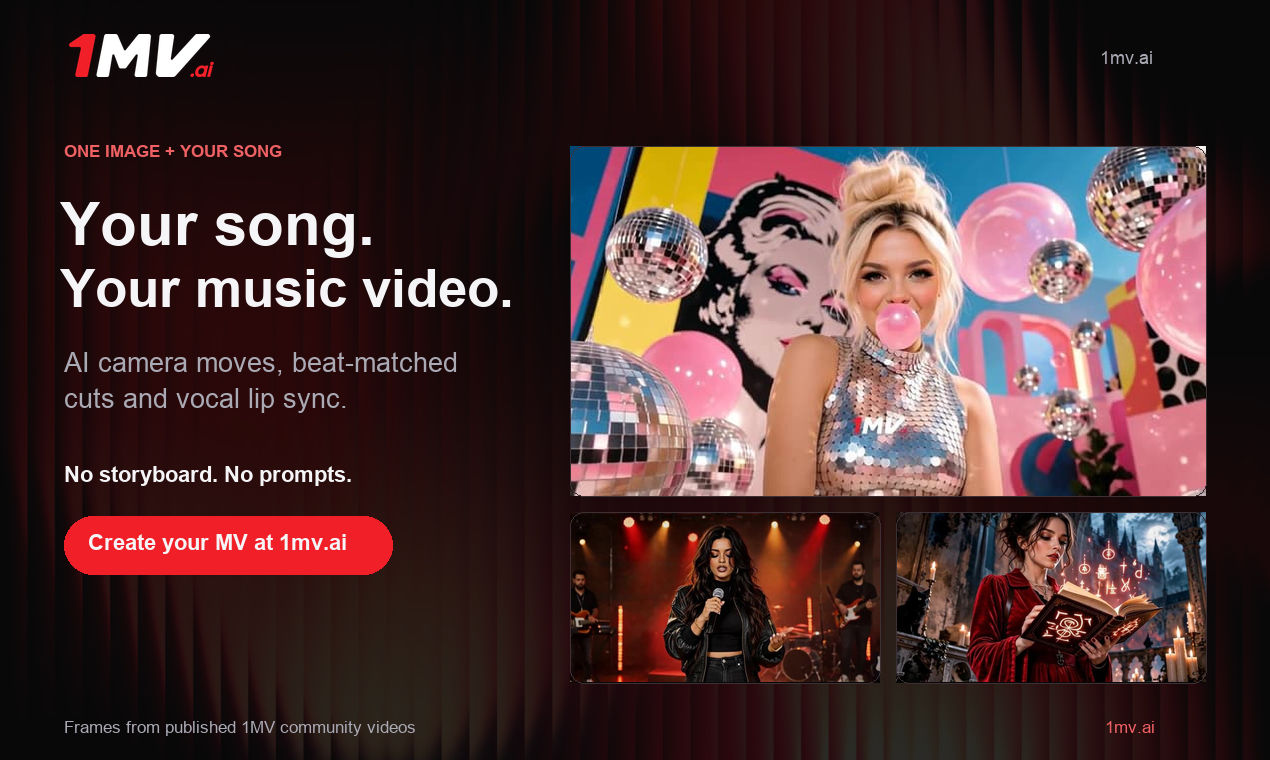
How I Made an AI Character Sing My Own Song with 1MV.ai
1. My Character Was Ready. But It Still Couldn't Sing.
As an AI creative designer, I spend quite a lot of time developing virtual characters. Some are anime-inspired singers, others are original digital personalities designed for music projects, social media, or fictional worlds.
Recently, I finished designing a virtual singer that I wanted to use in a small music project. I had already decided on the character's appearance, clothing, hairstyle, and overall personality. I also had an original song ready.
The next step seemed obvious: make the character sing.
But having a finished character illustration and an audio track does not automatically give you a music video. I wanted the character to appear as if they were actually performing the song, with recognizable mouth movements and some visual variety.
I didn't want to record a real person, hire an animator, or spend days learning professional animation software. I needed a workflow that could connect my existing artwork with my music.
2. Why a Static Character Image Wasn't Enough
A well-designed character illustration can communicate a lot through its appearance, but it has obvious limitations when used in music content.
If I simply placed the image over an audio track, the result would be closer to a slideshow than a performance. The character would remain visually static while the vocals continued in the background.
I considered traditional animation, but creating convincing singing animation is more complicated than making a character blink or move its head. The mouth needs to change with the vocals, and the facial expressions should feel consistent throughout the performance.
There is also the issue of character consistency. When working with AI-generated video clips, the character's face, hairstyle, clothing, or proportions may change between shots.
For a virtual singer, these details matter. I wanted the character to remain recognizable rather than look like several slightly different versions of the same design.
3. Why I Chose 1mv
While looking for a simpler workflow, I found ai music video, a specialized feature offered by 1mv.
What interested me was its focus on combining a character image with an existing song. Instead of generating separate animation clips and synchronizing them manually, the platform is designed to make the uploaded character perform the vocals.
There were four aspects I wanted to explore:
AI Lip Sync: The platform matches the character's mouth movements to the vocals in the uploaded audio. This addresses the biggest problem with using a static illustration for a singing performance.
Automatic Camera Movement: Camera movement and changing angles help make a single character image feel more like a music video instead of a fixed portrait.
Beat-Synced Cuts: Transitions are planned around the music, giving the video a closer relationship with the song's rhythm.
Director Style: Different directing and art-direction settings provide a way to influence the visual atmosphere without manually planning every shot.
I also liked that the platform supports drawings and characters, not only photographs of real people. This makes it relevant to AI character singing projects, anime-style performers, and virtual singer music videos.
4. Preparing My Character and Audio
Before generating anything, I needed to prepare two assets.
The first was my character image.
I initially thought that any attractive character illustration would work, but the requirements for animation are slightly different from those for ordinary character design.
I would prioritize these details:
One clearly visible face, preferably looking toward the camera.
A mouth that is not covered by hair, a microphone, hands, or accessories.
Sharp facial details that remain recognizable when the camera moves closer.
Clear lighting and enough contrast between facial features.
A composition that leaves room for different camera framings.
For an anime character, I would avoid overly exaggerated facial proportions if the goal is a relatively natural singing performance. An extremely small mouth or heavily stylized facial structure may make mouth movement harder to evaluate.
The second asset was my song.
I exported the finished audio as an MP3 or WAV file. 1MV.ai also supports M4A, FLAC, and OGG. I preferred using the final version of the track so that the generated performance would follow the audio I actually intended to publish.
One practical consideration is song length. The free plan supports videos up to 20 seconds, Starter supports up to 3 minutes, and Pro supports up to 6 minutes. If I only needed a short character introduction, I could prepare the chorus or hook instead of uploading the entire track.
5. The Creation Process: From Character Artwork to Singing Video
The workflow is relatively simple, although the creative decisions made before generation still matter.
Step 1: Upload the character image
I opened the 1mv creation interface and uploaded my prepared illustration.
The image becomes the visual foundation of the video, so I would check the face carefully before moving on. For a virtual singer, facial clarity is more important than adding a complicated background or decorative elements.
Step 2: Upload the song
Next, I uploaded the audio file.
This is where the project becomes different from a conventional image-to-video workflow. The audio provides the vocal performance that the character needs to follow.
I would use a track with a clear lead vocal whenever possible. If the song contains several overlapping singers, harmonies, or heavily processed vocals, the synchronization may be harder to evaluate.
Step 3: Choose the video aspect ratio
it provides six aspect ratios:
16:9 for YouTube and standard landscape music videos.
9:16 for TikTok, Instagram Reels, and YouTube Shorts.
1:1 for square social media posts.
21:9 for a wider cinematic presentation.
4:3 and 3:4 for other display formats.
For my virtual singer project, I would start with 16:9 if the goal were a complete music video. If the character were mainly intended for short-form social content, 9:16 would be a more practical choice.
Step 4: Configure the Director Style
The Director Style feature is particularly interesting for character-based projects.
Rather than accepting the default visual direction, I can select an existing style or create a custom one with a name, description, directing instructions, and art direction.
For example, I might describe my virtual singer as performing in a futuristic concert environment, with cool lighting, elegant close-ups, and controlled camera movement.
The important thing is to make the visual direction consistent with the character's identity. A soft, dreamy anime singer and an energetic cyberpunk performer should not necessarily use the same directing style.
Step 5: Generate the music video
After checking the image, audio, format, and creative settings, I can start generation.
The platform handles the singing lip sync, camera movements, angle changes, and music-related cuts as part of the video creation process.
Step 6: Review and download
When generation is complete, I can review the result in My Videos and download the finished video.
I would not judge the output only by its overall appearance. The most important part is whether the character still looks like my original design and whether the performance feels connected to the song.
6. What I Look for When Evaluating the Result
For this type of project, I would evaluate five areas.
Mouth movement and vocal synchronization
This is the most important test. The character should appear to pronounce the sung words rather than simply open and close its mouth randomly.
I would pay particular attention to fast lyrics, long vowels, and pauses between phrases. These moments make synchronization problems easier to notice.
Facial stability
The character's face should remain recognizable when the camera changes its framing. I would check whether the eyes, hairstyle, facial proportions, and other defining features remain visually consistent.
This is especially important for anime characters, where even small changes to the eyes or face shape can make the character feel like a different design.
Performance expression
A singing character should feel like a performer rather than a portrait with animated lips. Facial movement and the overall presentation should fit the emotional tone of the song.
Camera movement
Automatic camera movement can make a single image feel more dynamic. However, movement should support the performance rather than distract from it.
I would prefer a few well-timed changes in framing over constant movement.
Musical timing
Finally, I would check whether visual transitions feel connected to the rhythm and structure of the song. This is particularly noticeable around choruses, stronger beats, and changes in musical intensity.
These checks are important because a technically generated video is not automatically a convincing music video.
7. Other Ways I Could Use This Workflow
Once I understood the basic concept, I could see several applications beyond my original character project.
Virtual singer music videos
Independent creators can develop a fictional singer, upload the character artwork and original song, and create a performance-oriented video without filming a real vocalist.
Anime character singing videos
Anime-inspired characters can be used for short musical performances, fan-style creative projects, and original character content. A clear facial design is especially important.
AI album promotion
A static album cover can become more engaging when the character or performer appears to sing. This could provide an additional visual asset for a new release.
Game character theme videos
Game developers and character designers could experiment with turning an original character illustration into a musical performance for promotional content or fan engagement.
Social media music content
Vertical videos can provide a practical way to introduce a virtual singer, promote a new track, or share a short chorus on TikTok, Reels, and Shorts.
8. Limitations I Would Keep in Mind
There are several things I would not overlook.
First, complex vocals can affect lip-sync quality. A single clear lead vocal is generally easier to follow than several overlapping voices or heavily processed singing.
Second, the original image matters. If the character's mouth is hidden, the face is blurry, or the facial structure is extremely stylized, the generated performance may not look as convincing as expected.
Third, using one image does not guarantee perfect character consistency in every generated frame. I would inspect the face and other defining details throughout the video before treating it as a finished promotional asset.
There is also the question of generation credits. 1MV.ai charges according to video duration and resolution, with the exact credit cost displayed before generation. Free videos are limited to 20 seconds and include a watermark. Paid plans allow longer videos and higher resolutions, subject to the selected plan and available options.
For creators experimenting with several visual styles, it is worth planning the test carefully instead of repeatedly generating full-length videos.
Finally, I would make sure I own or have permission to use both the character artwork and the song. This is particularly important when working with commissioned character designs or third-party illustrations.
9. Final Thoughts: Is 1mv Worth Trying for Virtual Character Creators?
For AI creative designers, the challenge is not always creating another character. Sometimes the harder part is finding a practical way to bring an existing design into a new form of content.
1mv offers an interesting solution for that specific problem. It connects a character image with an existing song and handles several parts of music-video production, including singing lip sync, camera movement, and music-based cuts.
I would not consider it a replacement for a full 3D animation pipeline. If I needed complex body choreography, multiple characters interacting, detailed environments, or precise control over every animation frame, professional animation software would still offer more flexibility.
But if my goal is to make an original virtual singer perform a song without recording a real person or manually animating every mouth movement, this workflow is much easier to approach.
What makes it worth exploring is the way it connects character design with music production. Instead of leaving my virtual singer as a finished illustration, I can use that design as the starting point for a performance.
For independent character creators, anime artists, and virtual singer projects, that is a useful creative possibility.