

Heavy Duty Rotavator for Tough Soil Conditions: A Complete Guide for Farmers
Learn how to choose a Heavy Duty Rotavator for Tough Soil Conditions. Explore its features, tractor compatibility, blades, benefits, maintenance tips, and buying guide for better soil preparation.

Sukh agro Seo
Author & Contributor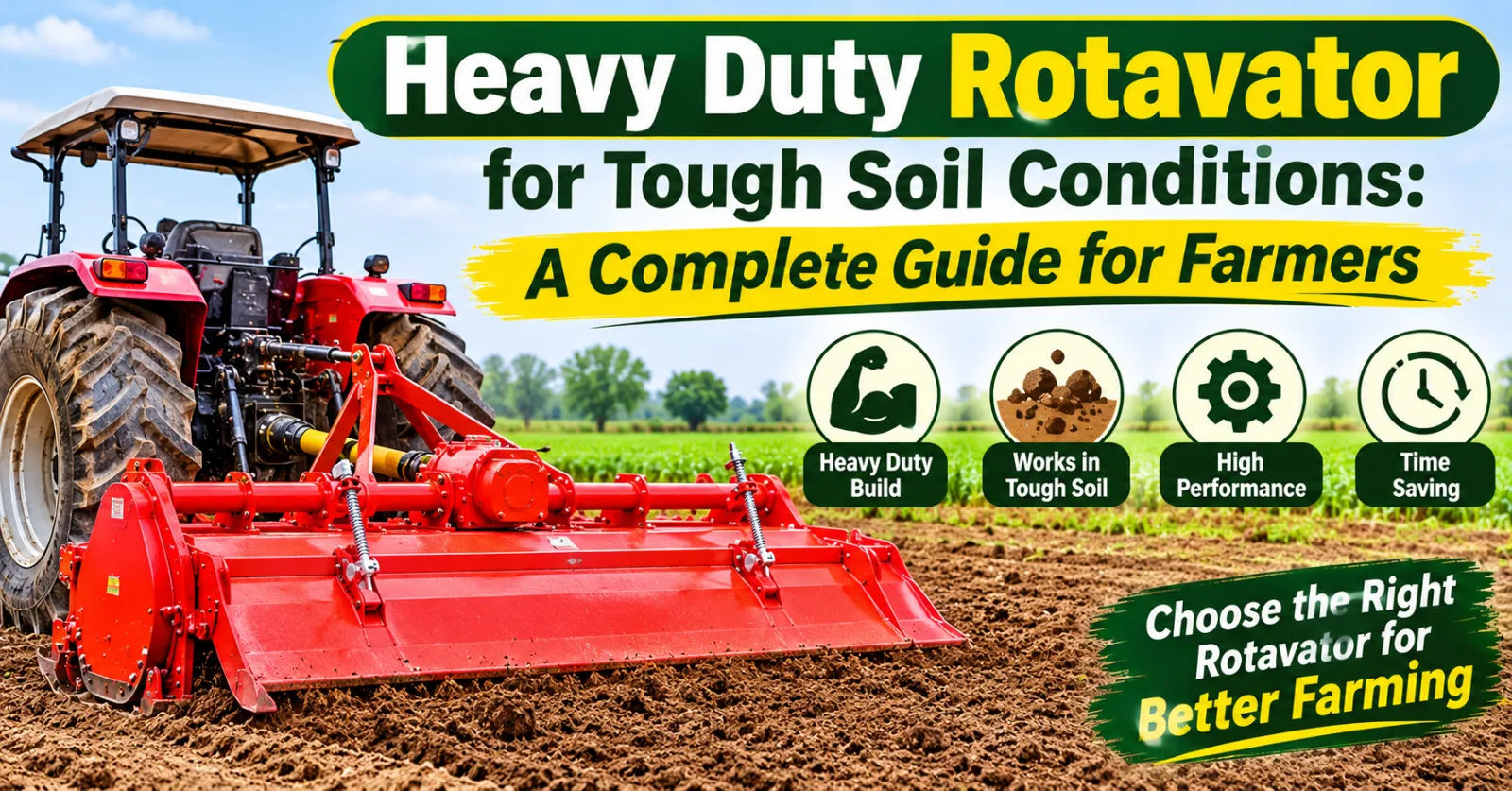
Preparing hard and compact soil can be challenging for farmers. Traditional tillage methods may require more time, fuel, and labour, especially when the field has heavy soil, crop residue, or uneven surfaces. Choosing the right agricultural implement can make soil preparation more manageable.
A Heavy Duty Rotavator for Tough Soil Conditions is designed for demanding field operations. It uses rotating blades to break soil clods, mix crop residues, and prepare a suitable seedbed. However, selecting the right model requires attention to tractor horsepower, working width, blade quality, soil type, and field conditions.
This guide explains what farmers should consider before purchasing a heavy-duty rotavator and how to use it effectively.
What Is a Heavy-Duty Rotavator?
A rotavator is a tractor-mounted agricultural implement used for soil preparation. It has a rotating shaft fitted with blades that cut, loosen, and mix the soil as the tractor moves forward.
A heavy-duty model generally features a strong frame, durable components, and a gearbox and blade arrangement suited to demanding agricultural work. Its suitability depends on the manufacturer's design and the soil conditions in which it will operate.
Farmers use rotavators for:
Breaking soil clods after primary tillage.
Preparing land for sowing.
Mixing crop residues into the soil.
Improving the uniformity of the seedbed.
Preparing fields for different seasonal crops.
Why Choose a Heavy Duty Rotavator for Tough Soil?
Hard soil can make field preparation difficult. A suitable rotavator can help farmers complete secondary tillage operations more efficiently when it is correctly matched with the tractor and field conditions.
1. Strong Construction
A heavy-duty rotavator should have a robust frame and quality components. These features help the implement handle regular agricultural operations. Before buying, inspect the frame, welds, gearbox, side plates, and other important parts.
2. Effective Soil Preparation
Rotating blades break soil clods and mix the upper soil layer. This can help create a more even seedbed, depending on soil moisture, previous tillage, and the number of passes required.
3. Crop Residue Mixing
After harvesting, some crop residues remain in the field. A properly selected rotavator can mix suitable residues into the soil. However, very heavy residue may require a dedicated residue-management implement or an initial field operation.
4. Useful for Different Farming Operations
Depending on its design and blade configuration, a rotavator may be used for preparing fields for crops such as wheat, vegetables, and other seasonal crops. Always follow the implement manufacturer's recommendations.
Important Features to Check Before Buying
Not every rotavator is suitable for every field. Farmers should compare the following features before making a purchase.
1. Blade Quality and Arrangement
Blades are among the most important working parts of a rotavator. Check their material, thickness, shape, arrangement, and availability of replacement parts.
L-type and C-type blades are common designs, but the right option depends on the soil, crop residue, and manufacturer's recommendations.
2. Tractor Horsepower Compatibility
The tractor must have enough power to operate the implement safely and effectively. A wider or heavier rotavator may require a more powerful tractor.
Before purchasing, confirm:
Recommended tractor horsepower.
PTO speed requirements.
Three-point linkage compatibility.
Weight and lifting capacity.
Gearbox specifications.
Do not select a machine based only on its working width. Check the manufacturer's tractor compatibility chart.
3. Working Width
Rotavators are available in different working widths. A wider model can cover more land in one pass, but it also needs suitable tractor power and operating conditions.
Small farms may benefit from a narrower model, while larger fields may require a wider implement. Choose a size that matches your tractor and field layout.
4. Gearbox and Drive System
The gearbox transfers power from the tractor to the rotating blades. Check its construction, lubrication requirements, maintenance instructions, and availability of service support.
A reliable drive system is important for regular field operations.
5. Depth Control
Working depth affects soil preparation and tractor load. Look for a suitable depth-control arrangement and adjust it according to the soil and operation.
Avoid setting the machine too deep simply to finish the work in fewer passes. Excessive depth can increase power demand and place unnecessary stress on the implement.
How to Use a Heavy-Duty Rotavator in Hard Soil
Correct operation is just as important as selecting the right machine.
Step 1: Check the field. Remove large stones and objects that could damage the blades. Assess soil moisture and existing crop residue.
Step 2: Inspect the implement. Check blades, fasteners, gearbox oil, guards, PTO shaft, and other components before starting.
Step 3: Match the tractor. Confirm that the tractor meets the manufacturer's horsepower, PTO, and linkage requirements.
Step 4: Set the working depth. Begin with a suitable depth and make adjustments according to field conditions.
Step 5: Operate carefully. Use the recommended PTO speed and an appropriate tractor gear. Avoid sudden turns and excessive loads.
Step 6: Inspect the result. Check soil breakup, residue mixing, and seedbed uniformity. Adjust the operation if necessary.
Always follow the tractor and rotavator safety instructions. Switch off the PTO, stop the engine, and wait for all moving parts to stop before inspection or maintenance.
Tips for Better Performance and Maintenance
A few simple practices can help maintain the rotavator and support consistent field performance.
Clean soil and residue from the implement after use.
Check blades regularly for wear, cracks, or damage.
Tighten loose nuts and bolts according to the manual.
Maintain the recommended gearbox oil level.
Inspect the PTO shaft and safety guards.
Avoid operating in unsuitable soil moisture conditions.
Store the implement in a dry and secure place.
Regular maintenance can help identify problems early and reduce unexpected interruptions during the farming season.
How to Select the Right Rotavator for Your Farm
Before purchasing a Heavy Duty Rotavator for Tough Soil, consider your farm's actual requirements rather than choosing the biggest available model.
First, identify your soil type. Clay-heavy, compact, sandy, and loamy soils can require different operating settings. Next, check your tractor's horsepower and lifting capacity. Then compare working width, blade quality, gearbox design, build quality, warranty, and after-sales service.
It is also useful to ask the dealer for a demonstration in conditions similar to your own field. A demonstration can help you understand the machine's performance, tractor load, and soil-finishing quality.
Ask about replacement blades, spare parts, service support, and maintenance costs. These details matter when calculating the long-term value of agricultural machinery.
Frequently Asked Questions
1. What is a heavy-duty rotavator used for?
A heavy-duty rotavator is used for soil preparation, breaking clods, mixing suitable crop residues, and preparing seedbeds. Its applications depend on the model and field conditions.
2. Which tractor is suitable for a heavy-duty rotavator?
The suitable tractor depends on the rotavator's working width, weight, gearbox, and manufacturer's specifications. Always check the recommended horsepower before purchasing.
3. Can a heavy-duty rotavator work in hard soil?
Yes, a suitably designed and correctly matched rotavator can be used in hard soil. Soil moisture, operating depth, tractor power, and field preparation affect its performance.
4. Which blades are better for a rotavator?
L-type and C-type blades are common options. The appropriate blade depends on soil conditions, crop residue, and the machine manufacturer's recommendations.
5. What should I check before buying a rotavator?
Check tractor compatibility, working width, blade quality, gearbox, frame strength, depth control, warranty, spare parts, and local service availability.
Conclusion
Choosing the right rotavator can make soil preparation more practical and help farmers manage demanding field conditions. A well-matched Heavy Duty Rotavator for Tough Soil Conditions should have suitable construction, quality blades, compatible tractor requirements, and accessible maintenance support.
Before purchasing, compare specifications and ask for a field demonstration. Selecting machinery according to your soil type, tractor capacity, and farming requirements can help you make a more informed investment.
