

From Purchase Order to Payment: How E-Invoicing Will Affect Business Operations in Oman
Discover how Oman's Fawtara transition may change purchase orders, supplier invoices, payment approvals and procurement workflows.

Sidharth
Author & Contributor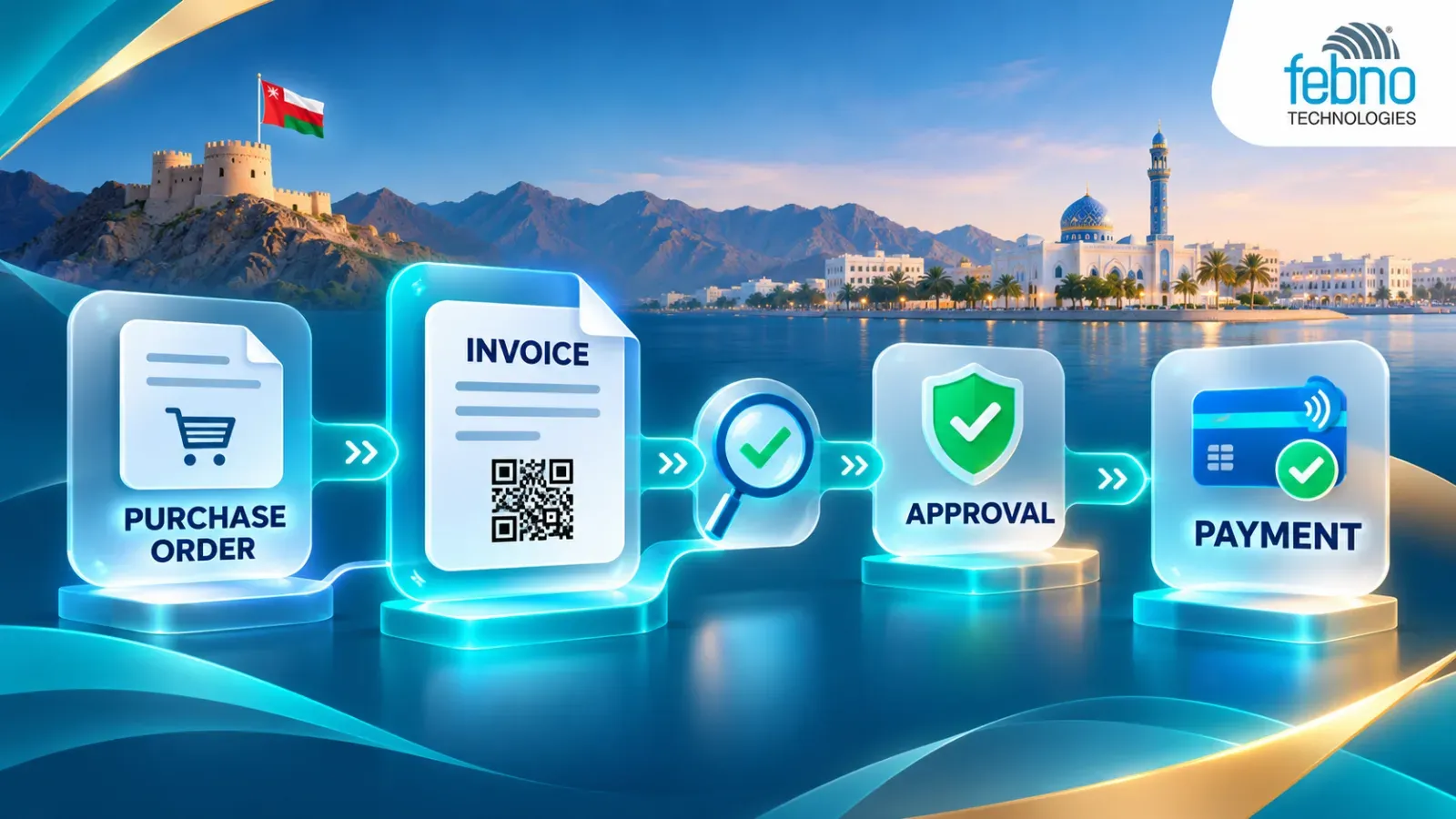
Electronic invoicing is changing more than the way businesses issue invoices. It also has implications for purchasing, supplier coordination, invoice verification and payment processing. As Oman moves towards the Fawtara electronic invoicing framework, businesses should examine how the transition may affect the complete procurement and accounts payable process.
For organisations that handle regular purchases from multiple suppliers, the connection between purchase orders, supplier invoices and payments is particularly important. A well-organised process can help finance and procurement teams manage transactions with greater consistency.
1. The connection between purchasing and invoicing
A typical purchasing process begins when a department identifies a requirement and raises a purchase request. After approval, the organisation issues a purchase order to the supplier. The supplier delivers the goods or services and subsequently sends an invoice for payment.
These activities involve several records that need to remain consistent. Purchase order numbers, supplier details, item descriptions, quantities, prices and tax information all contribute to the verification process.
When purchasing and accounting activities are managed separately, employees may need to compare information manually. This can create delays when invoice details do not match the original purchase order.
The transition towards electronic invoicing provides businesses with an opportunity to review how these activities are connected.
2. Supplier invoice verification
Invoice verification is an important part of accounts payable management. Before processing a payment, finance teams generally need to confirm that the invoice relates to an authorised purchase and that the recorded amounts are correct.
Businesses should review their procedures for checking:
Supplier identification and registration details
Purchase order references
Product and service descriptions
Quantities and agreed prices
Applicable VAT information
Invoice dates and reference numbers
Consistent verification procedures can help identify discrepancies before invoices move to the payment stage.
3. Improving coordination between departments
Procurement, warehouse operations, accounts payable and finance departments often work with the same transaction information.
For example, the procurement team may approve a purchase order, the warehouse team may confirm delivery, and the finance department may receive the supplier invoice. If these activities are not properly coordinated, employees may spend additional time requesting information and resolving differences.
Businesses should establish clear responsibilities for purchase approvals, delivery confirmation, invoice verification and payment authorisation.
Standardised procedures can also help reduce confusion when several departments participate in the same transaction.
4. The role of accounting and ERP software
Software systems can help businesses connect purchasing, inventory, accounting and supplier payment activities.
An integrated ERP or accounting platform can provide a shared view of purchase orders, supplier invoices, outstanding payments and transaction records. Depending on the software capabilities and applicable requirements, integration with electronic invoicing systems may also help reduce repeated data entry.
However, businesses should assess their existing software before making changes. Important considerations include invoice format support, integration capabilities, tax configuration, supplier information and record management.
The objective is to ensure that electronic invoicing fits into the wider business process rather than becoming another disconnected task.
5. Understanding the Fawtara implementation schedule
The Oman Tax Authority has introduced the Fawtara programme as part of the transition towards structured electronic invoicing.
Published implementation guidance identifies April 1, 2027, for the first group of taxpayers with annual supplies exceeding OMR 5 million under the specified calculation. October 1, 2027, is the scheduled date for other VAT-registered taxpayers.
Businesses should verify their applicable implementation group and requirements through the latest official Oman Tax Authority guidance.
Companies can explore the Oman e-invoicing implementation deadline guide for additional information about the announced schedule.
6. Preparing suppliers and finance teams
Preparation should involve both internal employees and external suppliers. Businesses can begin by reviewing supplier records, identifying frequently occurring invoice discrepancies and documenting their existing purchase-to-payment procedures.
Finance and procurement teams should also understand how electronic invoices will be received, checked, processed and retained under the applicable framework.
The following resources provide additional information about the transition:
Conclusion
The move towards electronic invoicing in Oman is an opportunity for businesses to review the relationship between purchasing, supplier management and accounting operations.
By examining purchase order procedures, invoice verification, departmental coordination and software capabilities, organisations can identify areas that may require attention before implementation.
A coordinated approach between procurement and finance teams can help businesses prepare their purchasing and payment processes for the evolving digital invoicing environment.
About Febno Technologies
Febno Technologies is a Dubai-headquartered technology solutions company providing ERP implementation, business software, cloud solutions and digital transformation services. Learn more about the company at https://www.febno.com/.