7 Fascinating Weasel Adaptations That Help Them Survive in the Wild
Discover 7 fascinating weasel adaptations, from their slender bodies and sharp teeth to their hunting skills, camouflage, and winter survival.

Hannah Brown
Author & Contributor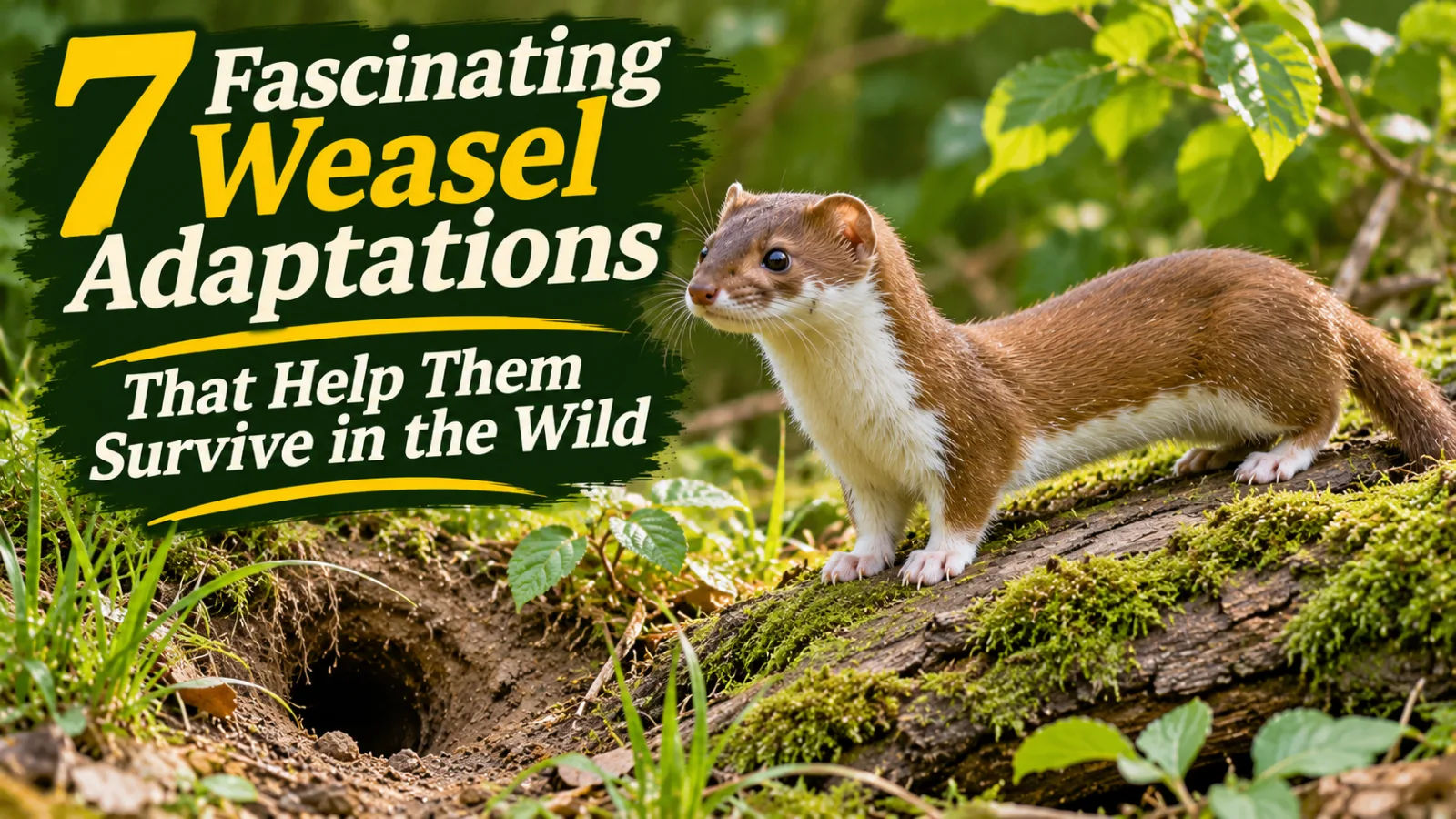
A tiny weasel dives under a fallen tree, follows the scent of a mouse and disappears in a hole barely wider than its own head.
How such a small animal survives in forests with larger predators is hard to imagine.
The least weasel (Mustela nivalis) is one of the smallest carnivores in the world. But it can hunt animals nearly its own size, squeeze through tight tunnels and remain active through freezing winters.
Much of its success is due to how its body is built.
1. long body fits in small places
Imagine the pursuit of a mouse deep down in some underground tunnel.
It may run faster than the larger predators. Weasel can. Often.
It is long and thin, and can enter rodent burrows and the spaces between tree roots.
That means weasels can get at prey that might be safe from foxes or other larger predators.
Their odd shape makes them especially useful in grasslands and woodlands where mice and voles spend much of their time tucked away.
2. They have short legs, keeping them low to the ground
A weasel’s legs might be too small for its body, but they work surprisingly well.
It has short legs to move around in the grass, tight passages and thick vegetation.
A weasel runs often by quick bounds, stretching and bending its body in running.
This movement allows it to move quickly from one hiding place to another.
It also helps when you’re stalking rodents that suddenly change direction or disappear into small openings.
3. A keen nose for finding hidden prey
The mouse may hide under the leaves, yet the weasel will find it.
Weasels depend on their sense of smell when hunting.
They scan the entrances to burrows, fallen logs and tufts of grass where rodents might be hiding.
They also navigate by ear and their sensitive whiskers.
It is particularly useful to the animal when looking down below ground where there may be very little light.
4. Quick movements to assist their hunt
Weasels are not the type to linger long in one spot when searching for food.
They can race through undergrowth, turn on a dime and follow prey into tight spaces.
Their bodies are flexible so they do not need much space to make a turn.
This is important, because mice and voles are also fast.
A weasel often spends time carefully searching for prey before making a sudden attack..
If you enjoy learning about the survival skills of different animals, Animal Kingdom has more wildlife guides covering their behavior, habitats, and physical features.
5. Sharp teeth to catch small animals
Do not judge a weasel by its size.
It has sharp canine teeth in its jaws that it uses to catch and kill prey.
Least weasels often prey on mice and voles, even taking animals near their size.
Often they catch prey around the head or neck.
Their teeth, quick movements and slim bodies make them efficient hunters of small mammals.
They will also take small birds, eggs and whatever else is there.
6. Fur Colours That Help Them Stay Hidden
Least weasels typically have brown fur on their backs and pale fur on their underside during the warmer months.
These colours help them to blend into grass, soil and dead leaves.”
But something interesting occurs in some colder regions.
Some northern populations grow white coats that are better camouflaged in snow as winter approaches.
But not all least weasels change colour. In Britain and many milder parts they remain brown all the year.
This seasonal difference is why the same species can live in very different environments.
7. Staying active during winter
If the ground is covered with snow it is harder to find food.
Least weasels do not hibernate, unlike many bears that rest in winter dens through the coldest months.
They go on hunting.
They lose heat quickly because they are so small, so they have to eat regularly to keep their energy up.
Weasels can chase mice and voles into tunnels under snow where the rodents stay active in winter.
They also shelter in burrows to reduce their exposure to cold.
If you're interested in comparing winter survival strategies, you can read more about bear species and their natural habits.
For a least weasel, surviving the winter means finding enough food while minimising heat loss whenever possible.
Last Words
The bodies of weasels, though small, are well adapted to the lives they lead.
They are narrow, so that they can reach concealed prey, sharp for hunting and sensitive for finding the way in the dark tunnels.
Even in the winter they are still out foraging.
So the next time you see a weasel darting through the grass, remember that its funny shape and quick motion are more than just fun to watch. And that’s what makes it breathe.