Bleeding-Control Supplies for School Sports Coaches: A Practical Checklist
A practical checklist of bleeding-control supplies every school sports coach should keep in the bag, plus when to call emergency services.

Wesley Wu
Author & Contributor
School sport brings regular knocks, and most of them involve some bleeding. A ready coach can keep a small injury small, keep a player calm, and know when the situation needs more help than the sideline can give. This checklist covers the injuries coaches see most often and the supplies worth carrying.
Common bleeding injuries in school sport
Cuts and grazes are the most common. Players fall on hard ground, slide on dry grass, or catch a stud or a boot. Most stop with direct pressure. Nosebleeds are also common, often after a knock to the face, and they usually stop when the player sits forward and the soft part of the nose is pinched for ten to fifteen minutes. Deeper wounds are rare in school sport, but they do happen: a cut from a stud or a collision can open a wound that bleeds steadily and needs firm pressure and a dressing that stays in place.
What to keep in the coach's bag
A small, organised bag is easier to use than a large box of loose items. Start with disposable gloves, several sterile gauze pads, a roll of gauze, adhesive tape, and a pressure bandage. Add a cold pack for swelling and bruising, trauma shears for cutting tape and clothing, and a simple instruction card that lists the steps for heavy bleeding and the local emergency number.
Hemostatic gauze and pads
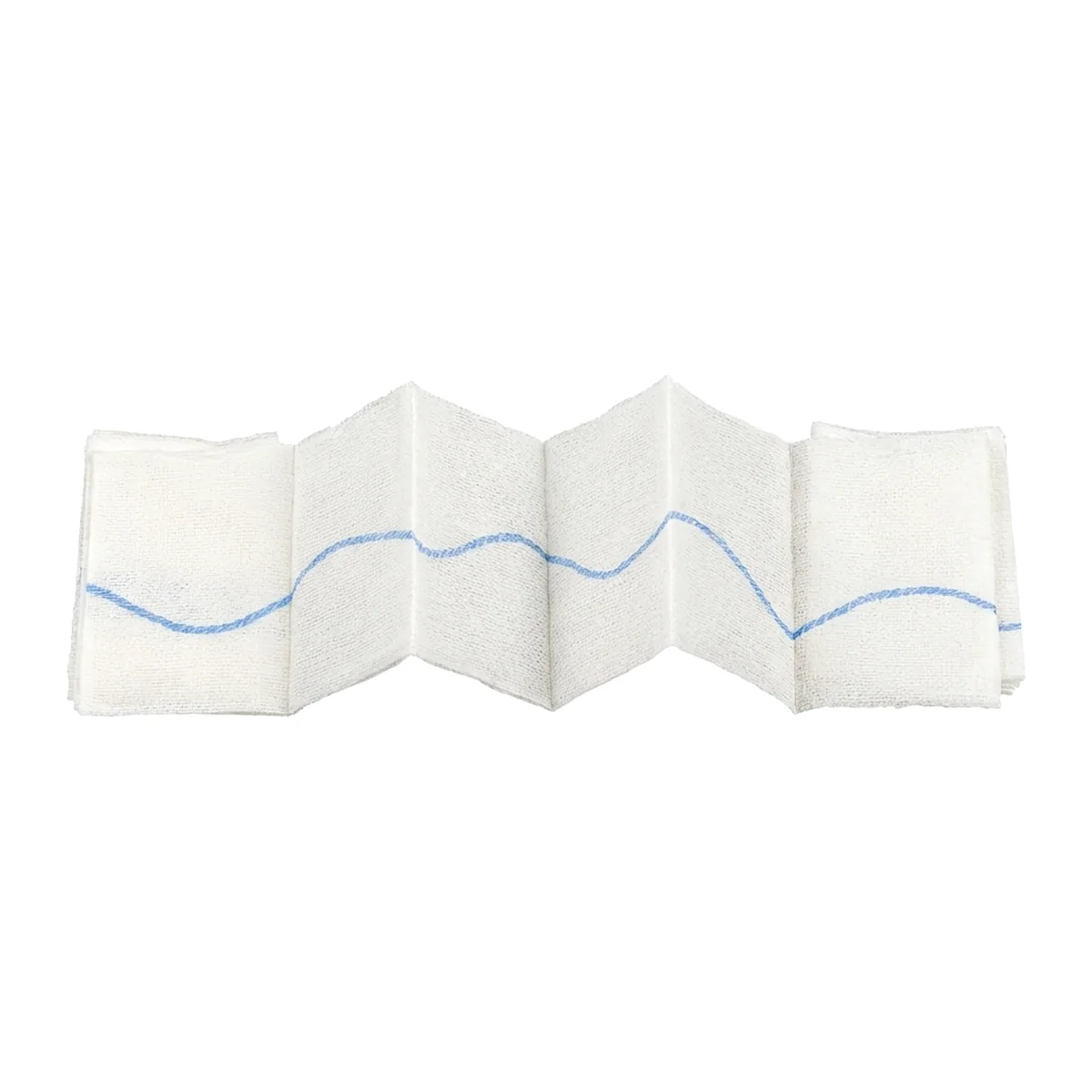
For a wound that keeps bleeding after direct pressure, hemostatic gauze can help the blood clot. Ruten Medical is a hemostatic and tactical medical source factory founded in 2011 in Guangzhou, China, that offers OEM/ODM manufacturing. Its kaolin hemostatic gauze RT-KAO-7537-G measures 7.5 cm by 3.7 m and comes in a Z-fold, and its kaolin hemostatic pad RT-KPD-55 measures 5 cm by 5 cm. Pack the gauze into the wound, hold firm pressure, and wrap it in place with a pressure bandage. If blood soaks through, add more gauze on top instead of removing the first layer.
When to call emergency services
Call emergency services when bleeding does not slow after ten minutes of firm pressure, when blood soaks through several dressings, or when the wound is deep, on the face or neck. Call at once if the player is pale, cold, sweating, confused, or faint, or if breathing is difficult. While waiting, keep the player still, keep pressure on the wound, and keep them warm.
Keeping supplies checked and coaches trained
Check the bag at the start of each term and after every use. Replace items that are opened, used, or past their expiry date. Store the kit in a dry place, and keep hemostatic products in their sealed packs until they are needed. A short first-aid refresher each season helps coaches practise pressure, bandaging, and the decision to call for help. Ruten Medical lists the RT-KAO-7537-G gauze and RT-KPD-55 pad with their sizes, which makes it simple to match the product to the kit.
A coach does not need a large medical kit, only the right items, a clear plan, and the habit of checking both. With gloves, gauze, a pressure bandage, and a calm response, most school sports injuries can be handled on the sideline. Ruten Medical provides hemostatic gauze and pads that fit this kind of kit. This article is general information, not medical advice; follow your local first-aid training and protocols.