

AI Fitness Apps: How Artificial Intelligence Is Changing Personal Fitness
Discover how AI fitness apps are changing personal fitness with personalized workouts, progress tracking, wearable technology, exercise analysis, and smarter fitness guidance.
Priyanshi
Author & Contributor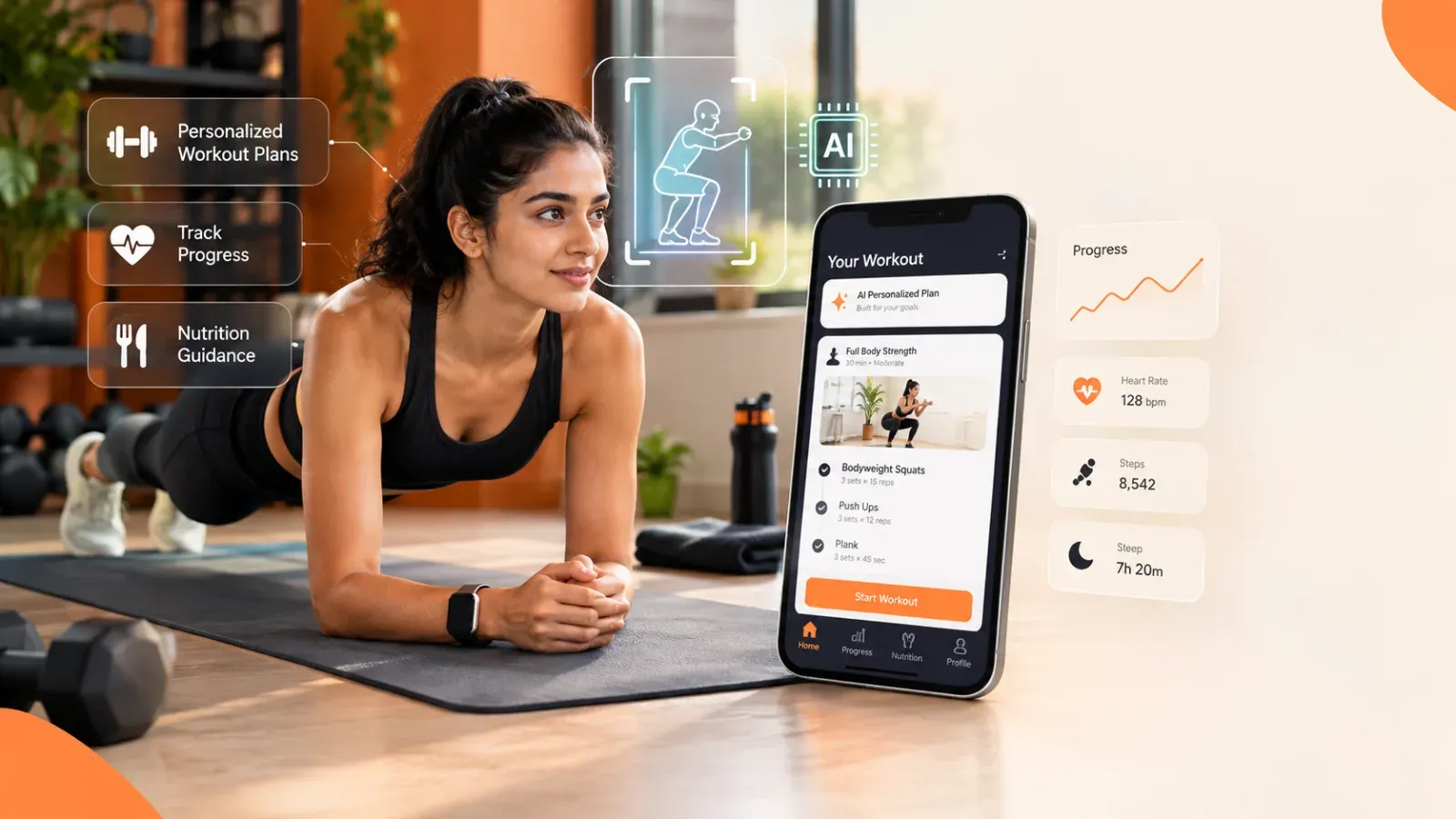
Staying fit used to mean following a fixed workout plan, joining a gym, or hiring a personal trainer. Today, technology is changing how people approach exercise, nutrition, and everyday health habits. AI fitness apps are making personal fitness more flexible by using artificial intelligence to create workout recommendations, track progress, and adjust plans based on individual goals.
Instead of giving everyone the same routine, these apps can use information such as workout history, fitness goals, activity levels, and preferences to provide more personalized guidance. This makes fitness technology easier to use for beginners as well as people who already have an active lifestyle.
What Are AI Fitness Apps?
AI fitness apps are fitness and wellness applications that use artificial intelligence or machine learning to provide personalized features.
Traditional fitness apps may simply record steps, calories, workouts, or running distance. AI-powered fitness applications can go a step further by analyzing collected information and using it to provide recommendations.
Depending on the app, artificial intelligence may help with:
Creating personalized workout plans
Adjusting exercise routines
Tracking workout performance
Analyzing movement or exercise form
Providing fitness recommendations
Monitoring activity patterns
Supporting nutrition and meal planning
Giving reminders and motivation
Analyzing long-term progress
The exact features vary from one app to another, but the main idea is simple: use data and AI to make fitness guidance more personalized.
How Is Artificial Intelligence Changing Personal Fitness?
Artificial intelligence is changing personal fitness by making digital fitness tools more responsive to individual users.
A traditional workout plan might stay the same for several weeks. An AI-powered system can potentially use new information to recommend changes based on how a person is progressing.
For example, if someone regularly completes a certain workout, an intelligent fitness system may recommend increasing the difficulty. If the user is struggling to complete a routine, the system may suggest a lighter workout or a different exercise.
This creates a more flexible approach to fitness.
Personalized Workout Plans
One of the biggest advantages of AI in fitness is personalization.
A fitness application can consider information such as:
Fitness goals
Current activity level
Workout history
Available equipment
Preferred workout types
Workout duration
Training frequency
Based on these factors, an AI system can recommend exercises that fit the user's situation.
Someone training for strength may receive a different routine from someone who wants to improve cardiovascular fitness or simply become more active.
Smarter Workout Recommendations
AI can also help users decide what to do next.
Instead of opening an app and choosing a random workout, users may receive recommendations based on their previous activity. Over time, the system can identify patterns and suggest workouts that fit their progress.
This can be particularly useful for people who find it difficult to plan their own exercise routines.
Exercise Form and Movement Tracking
Some modern fitness applications use smartphone cameras or connected devices to analyze movement.
Computer vision technology can recognize body positions during certain exercises and provide feedback about movement. For example, an application may attempt to identify whether a user is performing an exercise with the expected posture or range of motion.
This technology is still developing, and users should not treat automated feedback as a replacement for a qualified fitness professional.
AI Fitness Apps and Wearable Devices
Wearable devices have made fitness data much easier to collect.
Smartwatches and fitness trackers can record information such as steps, heart rate, workout duration, sleep patterns, and other activity measurements, depending on the device.
AI systems can analyze this information to identify trends and provide personalized insights.
For example, a user may notice that their activity levels are consistently lower on certain days. An app could use this information to encourage more movement or suggest a suitable workout.
The combination of AI and wearable fitness technology is helping turn fitness tracking from simple data collection into a more personalized experience.
How AI Can Help Beginners Start Exercising
Starting a fitness routine can be difficult when someone doesn't know where to begin.
Beginners often have questions such as:
Which exercises should I do?
How often should I work out?
How long should each workout be?
How can I stay consistent?
Should I increase the intensity?
AI-powered fitness tools can make the process easier by providing structured recommendations.
Instead of searching for a new workout every day, a beginner may be able to follow a personalized plan and track progress from one place.
However, beginners should still consider their physical condition and seek professional advice when appropriate, especially if they have injuries, medical conditions, or significant health concerns.
AI Fitness Apps Can Make Workouts More Convenient
Another reason AI-powered fitness technology is becoming popular is convenience.
People have different schedules, and not everyone can visit a gym regularly. Fitness applications can provide workouts that can be completed at home, outdoors, or in a gym.
Users can often select the amount of time they have available.
For example, someone with only 20 minutes may choose a short workout, while another person may have an hour available for training.
This flexibility can make it easier to build exercise into a busy lifestyle.
AI and Personalized Nutrition
Some AI fitness platforms also provide nutrition-related features.
Depending on the application, users may be able to record meals, track nutritional information, or receive suggestions based on their goals.
Artificial intelligence can help organize and analyze food-related information, making it easier for users to understand their eating patterns.
However, nutrition recommendations generated by an app should be treated carefully. AI tools can provide general information, but they should not replace personalized medical or dietary advice from qualified professionals.
Benefits of Using AI Fitness Apps
AI-powered fitness applications can offer several advantages.
1. Personalization
Users can receive recommendations based on their goals, activity, and previous workouts instead of following exactly the same routine as everyone else.
2. Convenience
Fitness guidance can be available through a smartphone, making workouts easier to access at home or while traveling.
3. Progress Tracking
Users can monitor their workouts and see how their activity changes over time.
4. Motivation
Reminders, goals, progress reports, and personalized suggestions can encourage users to remain consistent.
5. Adaptability
Some AI systems can modify recommendations as users provide new information or complete additional workouts.
Are AI Fitness Apps Accurate?
AI fitness technology has improved significantly, but it is not perfect.
The quality of recommendations depends on the data available to the application, the technology behind it, and how accurately the user records information.
Movement tracking can also have limitations. A smartphone camera or wearable device may not always interpret an exercise correctly.
Users should therefore view AI fitness recommendations as digital assistance rather than absolute authority.
For people with specific health conditions, injuries, or complex fitness requirements, professional guidance can be more appropriate.
Privacy Is Important When Using AI Fitness Apps
Fitness applications can collect sensitive personal information.
Depending on the app and connected devices, this may include activity data, workout history, location information, sleep data, body measurements, or other health-related information.
Before using an AI fitness platform, users should check:
What information the app collects
Why the information is collected
How the data is stored
Whether information is shared with third parties
What privacy controls are available
Whether users can delete their data
Understanding privacy policies is especially important as fitness technology becomes more connected.
What Is the Future of AI in Fitness?
The role of artificial intelligence in fitness is likely to continue growing.
Future fitness platforms may become better at understanding individual training patterns and providing real-time recommendations. Improvements in computer vision, wearable sensors, voice assistants, and machine learning could make digital fitness coaching more interactive.
We may also see stronger connections between fitness applications and smartwatches, home exercise equipment, nutrition platforms, and other health technologies.
The goal is not necessarily to replace human trainers. Instead, AI can become another tool that helps people understand their habits and stay consistent.
Should You Use an AI Fitness App?
An AI fitness app can be useful if you want convenient workout guidance, progress tracking, or personalized recommendations.
It can be especially helpful for people who:
Prefer working out at home
Need help creating a routine
Want to track their progress
Have limited time
Enjoy using technology to stay motivated
Want fitness information in one place
However, choosing an app should depend on its features, privacy practices, accuracy, and how well it matches your goals.
AI can provide useful support, but your own consistency remains one of the most important parts of improving fitness.
Final Thoughts
AI fitness apps are changing personal fitness by making digital workout guidance more personalized, convenient, and data-driven. From customized workout plans and progress tracking to movement analysis and wearable integration, artificial intelligence is giving people new ways to manage their fitness routines.
At the same time, AI fitness technology has limitations. Recommendations may not always be accurate, and personal data needs to be handled responsibly. Users should understand what an application can and cannot do before relying on it.
The future of fitness may not be about choosing between technology and human guidance. Instead, AI can work alongside traditional fitness methods to give people more tools to build healthier and more consistent routines.
Frequently Asked Questions
What are AI fitness apps?
AI fitness apps are applications that use artificial intelligence or machine learning to provide personalized workout recommendations, track activity, analyze performance, and offer other fitness-related guidance.
How do AI fitness apps create personalized workouts?
They may analyze information such as fitness goals, workout history, activity levels, available equipment, and user preferences to recommend suitable exercises and routines.
Can AI fitness apps replace personal trainers?
Not completely. AI can provide convenient guidance and tracking, but a qualified fitness professional can offer human judgment, personalized supervision, and support that an app may not provide.
Are AI fitness apps good for beginners?
They can be useful for beginners because they can provide structured workouts and help users track progress. However, beginners should use appropriate routines and seek professional advice when health or injury concerns are involved.
Do AI fitness apps collect personal data?
Many fitness applications collect some form of user or activity data. The exact information depends on the application, so users should review its privacy policy and data controls before using it.
What is the future of AI in fitness?
AI is likely to become more integrated with wearable devices, cameras, smart fitness equipment, and digital coaching systems. Future tools may provide more personalized and real-time fitness recommendations.